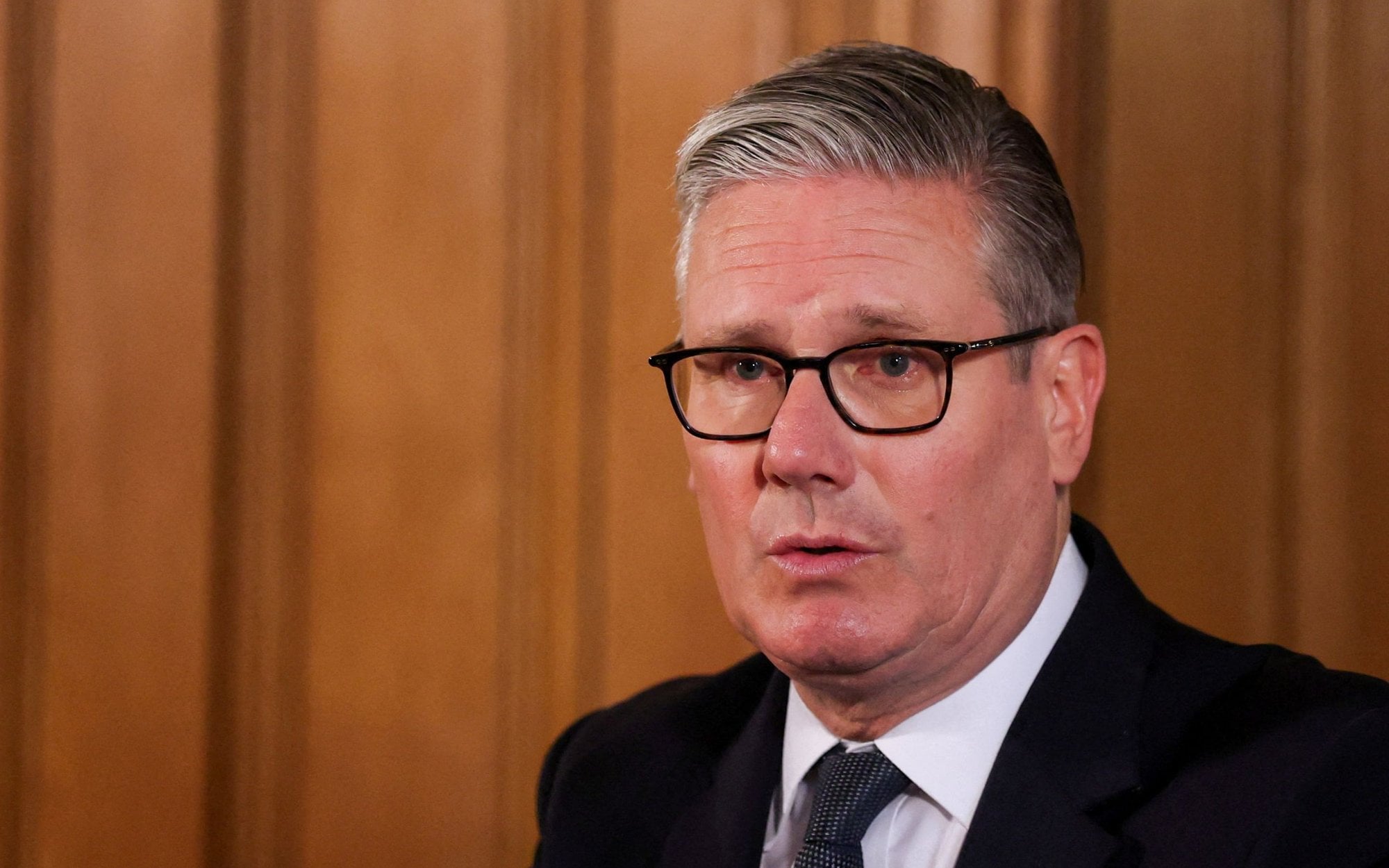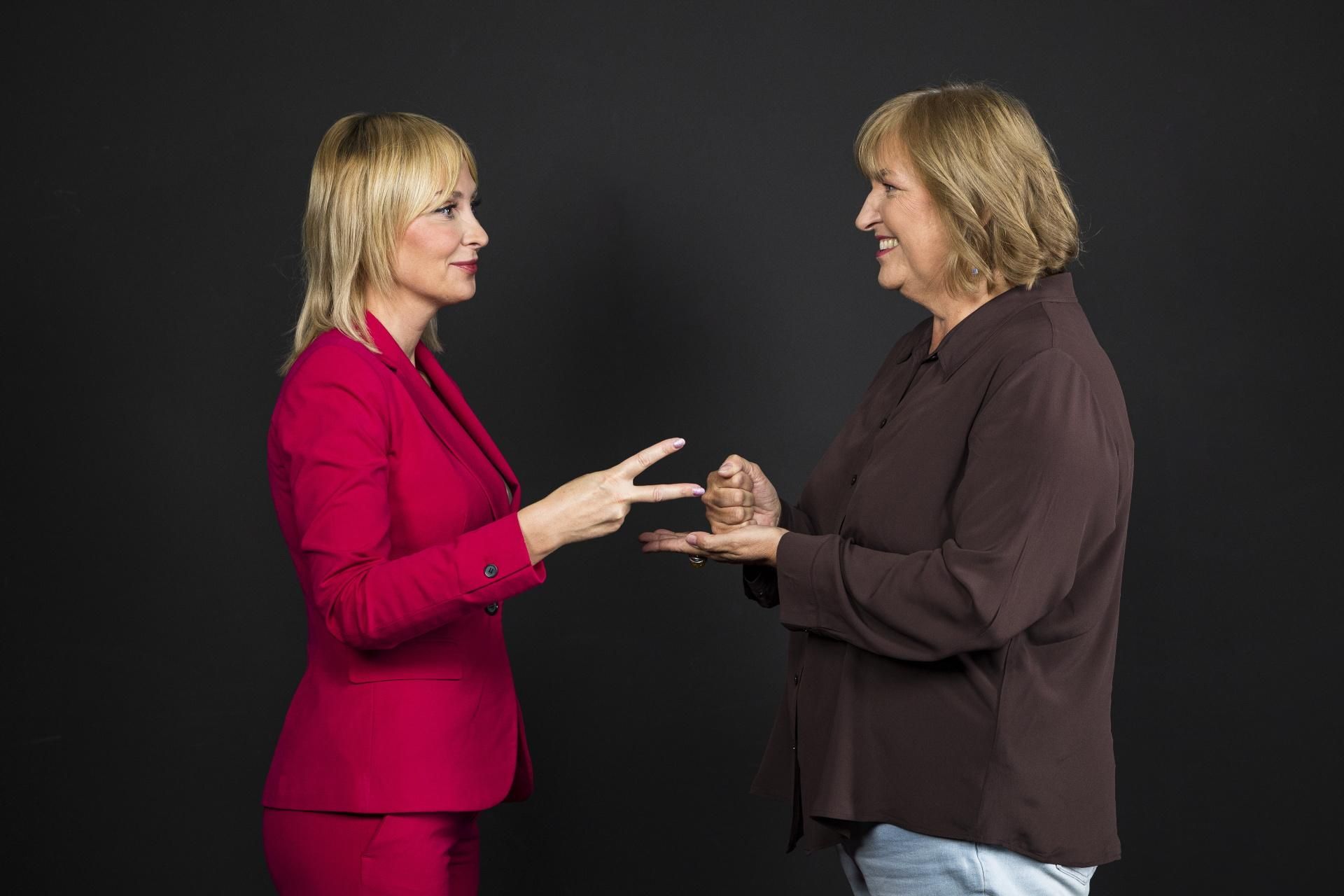
Carl Rhodes, author of „Stinking Rich” and „Woke Capitalism”, talks about the story of the billionaire as superhero and society’s saviour, and about the increasing and detrimental influence actual billionaires have on democracy and social life.
Prof. Monika Kostera: We are gathering present to discuss 2 books that have late been published, „Woke Capitalism: How Corporate Morality Is Sabotaging Democracy” (2022) and „Stinking Rich: The 4 Myths of the Good Billionaire” (2025). I grew up in 2 countries, Sweden and Poland. Even though, at the time, Poland was a communist country, it had a very strong working-class and labour movement, especially the trade union movement, which was very universalist due to the fact that it didn’t just include manual workers but connected all working people in Polish society. It emerged as the powerful Solidarity movement in 1980 and 1981. Then, unfortunately, we had martial law, which destructured all of that. However, there was inactive a culture of working people’s democracy. It was very much alive, and erstwhile the transition came in 1989, most of the people around me who were active in management studies were more or little convinced that Poland would have — and here comes my another background — something akin to Swedish social capitalism with strong trade union influence and workplace democracy.
Many people around me, who are no longer connected to those ideas, seemed to be profoundly influenced by Scandinavian ways of managing, and were completely alien to the thought that managers or rich people are good simply due to the fact that they are rich.
That couldn’t truly service as a foundation for a healthy society. This belief shifted overnight. These days, there is the presumption that the rich will save us. Therefore, we should be good to them. We shouldn’t protest. We should perceive to them due to the fact that they will save the day. The Zuckerbergs and the Elon Musks are superhero billionaires. What would you say to that? You present 4 myths in your most fresh book. Can you tell us a small bit about these myths?
Prof. Carl Rhodes: The historical period that you present, with a focus on the specificity of Poland, is the neoliberal era. This was a time marked by the overturning of many political and economical assumptions that existed leading up to the 1980s. alternatively of bringing democracy, this very transformative period brought shareholder primacy. The transition did not free the people of Poland, but alternatively it freed global markets.
What has curious me, and I explored it in my books, was the process of moralization of neoliberalism. How do these things come to be seen as good? The thought that rich people, who would erstwhile have been seen simply as exploiting labour or taking an unfair share of the world’s resources, have transformed into heroic figures. It was as if abruptly the liberation of global markets was going to solve all problems and let everyone to become a capitalist. The presumption is that everyone will win if we free things up at the top. We were told that state industries had to be privatised and opened up to competition, and that this would benefit everybody.And managers, in particular, were cast as the heroes who were going to save the day.
This was the time erstwhile there was a massive detonation of bestselling biographies written by business people, for example, General Electric’s Jack Welch or Lee Iacocca from Chrysler. You couldn’t imagine that in an earlier time. Before, managers were considered boring, conservative people who wore grey suits. Suddenly, they were recast as larger-than-life entrepreneurial figures. And with this came the thought that business in general is good.
At the same time, we witnessed dramatic growth in economical inequality within liberal democratic countries, and skyrocketing CEO and executive pay. The social democracy people hoped for was replaced by economical injustice. How do you justify that? How do those who benefit get distant with it morally? How do you justify the existence of billionaires, like Elon Musk, who is expected to become the first trillionaire? How do you account the reality that inequality is no longer just about poorness or destitution? Inequality is now affecting working- and middle-class people, who in many countries can no longer afford to buy homes. The alleged cost-of-living crisis that we saw after COVID-19 is truly a euphemism for an inequality crisis.
In the book Stinking Rich, I offer a cultural explanation of the question: How do they get distant with specified massive inequality? Inequality is commonly assessed from an economical perspective. Obviously, that’s important, but my position is more of a cultural one. I look at 4 different myths. The myths of the heroic billionaire, the generous billionaire, the meritorious billionaire, and the vigilante billionaire. I argue that these myths service to justify widening inequality. My point is that if we effort to undermine these myths, we can start to see the more dangerous realities behind them. alternatively than moving towards the dream of social democracy, it seems that we’re heading back to feudalism or plutocracy. In many ways, it looks like a reversal, akin to what Yanis Varoufakis argues in Technofeudalism (2023).
The first story sees the billionaire as the hero of the American dream, a figure that has been globalized through neoliberalism. It is simply a cruel version of social Darwinism, a “survival of the fittest” logic in which the rich become exalted due to the fact that they are seen as great. Conversely, if you’re not rich, or even worse, if you’re surviving in poverty, then you’re seen as a loser in life’s game. The rich, by contrast, are the winners. This is the globalized version of the American dream. It’s crucial to remember that this isn’t the first American dream. It’s a newer, darker version of it.
The word ‘American dream’ first appeared in the book titled The Epic of America by James Truslow Adams in 1931. He was looking at what he described as the character and opinions of average Americans. Of course, the book reflects the limitations of its time. It mostly excludes African Americans and Native Americans. Adams was mainly talking about European immigrants, many of whom had arrived in the United States in earlier decades, including a crucial number from Poland.
Adams argued that America promised freedom from the class-ridden, hierarchically structured societies of Europe, where social mobility was very hard and, for many people, almost impossible. The American Dream opened up the thought that everyone could be successful irrespective of their background. It was the thought that everyone could have a better life, as long as they were prepared to work hard and make a go of it. It was very much a dream that was opposed to inequality and opposed to the structured hierarchies that were present in Europe. The freedom that American democracy offered immigrants was not truly about individualism, but about equality and collective responsibility. It was about solidarity, a collective imagination of democracy in which everyone could flourish.
Neoliberalism has changed all of that. That sense of mutuality disappears. It’s no longer the thought that everyone can accomplish success if they are have the opportunity. Instead, there is simply a increasing conviction that inequality is simply a natural result of the fact that any people are simply more fit to prosper than others. With neoliberalism, the American dream transformed into a kind of Social Darwinism, coupled with the notion that there are natural winners and losers. The collective democratic imagination disappears, and inequality is presented as a natural outcome: any people are simply more fit to prosper than others. If you believe in this myth, billionaires are seen as better, stronger, fitter, or smarter. In that sense, billionaires are positioned as heroes.
For immigrants arriving by boat into fresh York City, The Statue of Liberty symbolized this dream. On the statue there is simply a celebrated sonnet The fresh Colossus, written by Emma Lazarus in 1883, which says:
„Give me your tired, your poor,
Your huddled masses yearning to breathe free
The wretched refuse of your teeming shore.
Send these, the homeless, tempest-tost to me,
I lift my lamp beside the golden door!”.
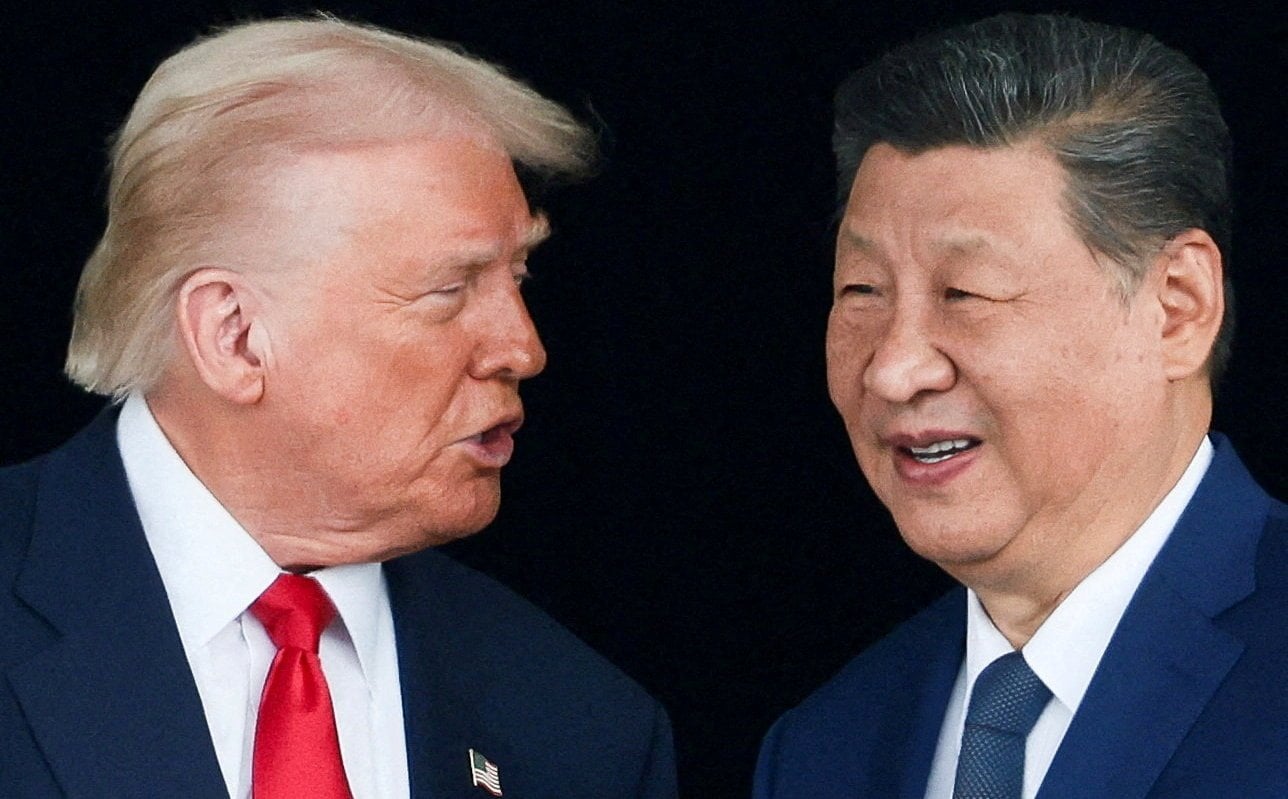
That thought seems very distant now. alternatively of welcoming the mediocre and the oppressed, contemporary politicians, for example Donald Trump, propose alleged ‘gold cards’ that let wealthy people to immigrate more easy to the United States.
You can compare this with the heroes that existed before neoliberalism, for example managers who were grey, possibly a bit dull, but liable and likable. The Swedish CEO of Volvo, Pehr G. Gyllenhammar, was widely liked due to the fact that he seemed to be a decent person. He was nice, he was kind. He wasn’t a superhero.
The 19th-century merchants, the equivalent of today’s managers, they were frequently culturally despised as scheming or mean-spirited. Back then, the real heroes were people like adventurers who sailed the seas to discover fresh lands. It’s fascinating to see how different societies crown heroes based on the spirit of their time, despite their failings. Today, look at billionaires like Elon Musk and Jeff Bezos with their spaceships and plans for colonizing Mars. It is almost as if they are trying to have the mythological appeal of figures like Neil Armstrong. You might have seen Jeff Bezos’s wedding in Venice last year. It was specified a blatant, ostentatious show of wealth. There was a time erstwhile the super-rich were modest, fearing a 'Bolshevik revolution’ on American shores, if regular people realized how deep the inequality was. But now, there’s no shame. Even since I finished the Stinking Rich book, the situation has evolved so rapidly that it already felt out of date by its release on January 21st, 2025. That was coincidentally the day after Trump’s inauguration. I had finished my last edits six months before Elon Musk was prancing around like an idiot as part of the Department of Government Efficiency. Now, erstwhile tech billionaires have dinner at the White home with Donald Trump, it is simply a display of self-congratulatory behaviour.
The second story I discuss is the 'generous billionaire.’ Billionaires are giving distant more money than always before. You’ve likely heard of the Giving Pledge, a philanthropic run started by Warren Buffett and Bill Gates back in 2010. They encouraged another billionaires to give distant their fortunes. About 300 people have signed up so far, including Mark Zuckerberg, Baron Hilton, Michael Bloomberg, and even Elon Musk. They all get to say how large they are for pledging their wealth. It’s what any call 'philanthrocapitalism’, which is doing philanthropy the 'business way.’ The neoliberal business model is based on the thought that the rich can and should save the planet utilizing market-based approaches and performance metrics. Just look at Bill Gates.
A fewer years ago, Gates wrote a book on how he has the answer to the climate crisis, and shortly after, another 1 on how to solve future wellness pandemics. Jeff Bezos set up the 'Earth Fund’ to solve climate problems, even though his business relies on distributing goods worldwide via fossil fuel-burning transportation. This apparent generosity justifies inequality and legitimizes capitalism. After all, what is more virtuous than generosity? It’s a basic human virtue. But if people pledge to give all this money distant while someway inactive getting richer, both individually and as a class, it starts to look like a fresh form of feudalism.
It is as if average people gotta last on the crumbs falling from the masters’ table with no democratic or public accountability. My argument is that this alleged generosity is actually the usage of wealth to engineer a transfer of political power from public, democratic hands into private ones. The social contract is being ripped up along the way. Bill Gates is most likely the worst example with the Bill and Melinda Gates Foundation. They had an endowment of about $75.2 billion as of 2024. Since 2010, they’ve handed out almost $78 billion across 135 countries. The Gateses themselves contributed almost $60 billion to the foundation, focusing on wellness and poverty.
Still, Bill Gates remains on the list of the world’s richest people. He doesn’t seem to be 'suffering’ for his charity. It’s all based on individual morality, with zero public accountability. He is 1 of the biggest donors to the planet wellness Organization, which gives him a massive say in global health. But why him? No 1 elected him, and no 1 can sack him. It’s an authoritarian position to be in. It means billionaires are increasingly able to make personal, idiosyncratic decisions about what to do in consequence to the world’s problems.
What about erstwhile Elon Musk put crucial amounts of money into influencing political campaigns, including the election of Donald Trump? This is the core issue: we are at the mercy of whatever whim these billionaires have. Elon Musk is the most telling example of how the most regressive political movements can be bolstered with money. He even tried to interfere in UK politics, specifically around the case of the far-right figure Tommy Robinson. He tried to influence the elections in Germany, and he’s inactive utilizing the platform X, formerly known as Twitter, to spread very peculiar political right-wing populist views. He’s not doing that due to the fact that he’s generated a following through political means. He’s doing it purely due to the fact that he’s got loads of money.
Should they even be making these decisions at all? If you compare it, for example, to the French billionaire Jean-Baptiste Dumont, who openly declared that these choices are not his to make. Instead, he proposed: 'Tax me more.’ That is the only decent thing a rich individual can do, in my view.
When it comes to corporations and wealthy people, they frequently stand up and pay homage to socially progressive movements, whether it’s Me besides or Black Lives Matter, as I explored in Woke Capitalism. These are very crucial political movements, yet no of them focus on economically progressive policies. No 1 talks about expanding the minimum wage, introducing a universal basic income, or making taxation more progressive so the rich pay a greater share. That is strictly off-limits. If it affects the wallets of the wealthy, the politics abruptly subside. There’s no consistent political position here. It’s just a substance of convenience.
This leads us to the 3rd myth, which is related to the heroic story but with a different twist. With the story of the ‘meritorious billionaire’ the thought is that it’s okay to be a billionaire due to the fact that you worked hard for your money and you deserve it as a consequence of merit. But there are 2 problems with the claim that billionaires are truly meritorious. First, is it actually true?
While many undoubtedly work hard and have intelligence, the reality of how billionaires become rich is frequently different.
An Oxfam study late pointed out that their wealth mostly stems from inheritance, monopoly marketplace power, social networks, or cronyism. It’s not just about hard work, it’s about these circumstantial tactics and advantages. It’s questionable whether their wealth is truly earned, as luck plays a immense part in this world. But let’s presume for a minute that billionaires are meritorious and their money is earned through hard work. alternatively a dubious assumption, considering how hard average people work just to survive. But still, the deeper question is: is meritocracy itself a good basis for society? Or is it just an unfair 'winner-takes-all’ strategy utilized as a false justification?
Meritocracy became a neoliberal buzzword in the late 20th century, popularized by the politics of Tony Blair in the United Kingdom and later Barack Obama in the United States. In the planet of management and organizations, this was the era erstwhile McKinsey coined the word 'war for talent’: the thought that you must fight for the 'best’ people and pay them astronomical sums to hold them. present meritocracy is presented it as a moral bedrock of democracy and capitalist societies, and at the same time as a justification for billionaires.
Is meritocracy truly specified a good thing? It’s just another strategy of inequality. If inequality is based on merit, is that any better than inequality based on birthright? In any case, in any ways, merit is simply a fresh form of birthright that determines who has natural advantages: 1 individual might be born intelligent, physically capable, with advanced stamina and neurotypical, able to work hard, while another individual lacks those traits. This difference is as crucial as being born the kid of a noble or a peasant. Meritocracy, by itself, is simply a weak foundation for building a society. It replaces birthright with talent but inactive produces inequality. It changes the mix of who is at the top of an unequal system, but it is inactive an unequal system.
The word ‘meritocracy’ was originally coined in the 1950s and was the object of socialist critique. Over time, it was hijacked by billionaires. For example, Donald Trump frequently claims his success was entirely his own, despite receiving a crucial support from his father. Elon Musk’s father owned an emerald mine in South Africa. Still, there’s a tendency for these people to insist that they are entirely meritorious, even erstwhile they clearly come from privileged backgrounds that they were able to take advantage of. They take large umbrage at any proposition otherwise due to the fact that it should be all about them. Generally, billionaires have historically been white men. Does that mean women are little meritorious than men? Of course not.
There are women of this kind as well, but simply swapping men for women doesn’t solve the problem if the same mentality remains. What we see is simply a consequence of utmost individualization. It’s a patriarchal story of the lone hero who solves all problems utilizing his self-defined talents, the alleged ‘cowboy’ archetype. For example, Olivier Amo, a strategy theorist and biologist, talks about robustness, or ‘wholeness’ in surviving systems. He emphasizes that the origin of life is genuine difference. You can call it diversity, difference, or even incoherence. We are all different, and that is the real power of life, not the celebration of a hero.
This actually leads into the 4th myth, the story of the ‘vigilante billionaire’. The vigilante is simply a long-standing character in Western culture. Think of Robin Hood or the classical cowboy from old films who is the lone figure who rises above the law, steps in where the strategy has failed, solves all the problems, and then rides off into the sunset, leaving peace behind. You see the same imagination applied to billionaires. Elon Musk is simply a perfect example. erstwhile he took over Twitter, it wasn’t just about moving a business to make money. He was presented as saving democracy, protecting free speech, positioning himself as a ‘free speech absolutist. Similarly, as the head of DOGE, he portrayed himself as saving America from its excesses.
Like vigilantes, billionaires frequently cast themselves as fighting against bureaucracies. Batman is another example. He is not a conventional superhero, but a billionaire who can step in and solve problems where the police fail. There’s a political historian named Jill Lepore, who talks about ‘Muskism’ (2021), a fresh form of capitalism where billionaires are like modern-day lords, while the remainder of us are peasants. They know best, and our destiny should be left in their hands due to the fact that they’re these magnificent vigilantes and heroes for humanity. They believe that wealth gives them a kind of moral superiority over everyone else. Many people buy into these myths, seeing these rich individuals as almost superhuman vigilantes who can bypass governments and whose judgement matters more than that of society. It’s all part of a false conviction. Society isn’t actually improving. We’re just getting more billionaires and more inequality. alternatively of shared prosperity and social progress, which people erstwhile believed in, or were even promised, we’re left with increasing disparities.
In the 1980s, in the UK where I was surviving at the time, Margaret Thatcher, influenced by ideas like Friedrich Hayek’s The Road to Serfdom (1944), promised that everyone could benefit from the neoliberal changes she introduced, and even that everyone could become a capitalist. The old class divisions between capitalists and workers were expected to disappear. Instead, things went in the other direction. And now the question is: where do we go from here? Many who criticized neoliberalism, me included, had a naive belief that fighting against it would lead to something better. And then we got Donald Trump. So, the question becomes: how can we hold hope in progress, in humanity, and in a imagination of shared prosperity? My tiny contribution is to effort to dispel these myths that justify inequality. At the very least, we can begin to rebuild a collectivist social imagination for democracy.
It’s truly crucial to reflect not just on the myths themselves, or what billionaires say, but on what they do. How they form our culture and our ways of thinking. You wrote that billionaires are not positioned as doing politics, they are ‘doing good.’ That’s part of the myth. The catch is that they get to specify what counts as ‘good’ for the remainder of us. Through these myths they specify what is good, not just in moral terms, as in your book, but in practice. I’m presently doing an ethnography of artists’ work, and I see how neoliberalism and billionaires, these key heroes of neoliberalism, specify what is beautiful. They specify what counts as beauty in art, in academia, even in science. They’ve created a planet for themselves by themselves. And the question is: can billionaires be good in a universal, humanist sense?
People frequently ask me to name billionaires who are ‘good,’ and I think we can easy get caught up in judging individual personalities, whether a individual is likable or not. Warren Buffett seems to appear as a cuddly, avuncular figure, while Elon Musk comes across as harder to like. You might not want him at your household dinner. But focusing on individuals is simply a distraction. The real problem is the politico-economic strategy that creates inequality. What’s not good is simply a strategy designed to produce and exacerbate economical inequalities, which include poorness and destitution, and increasingly affect working- and middle-class people as well. This is an issue within comparatively prosperous liberal democracies, but of course besides for little developed countries where the legacy of colonialism has left deep structural inequalities. Meanwhile, a billionaires like Jeff Bezos rides in a gondola and spends millions on a ringing for his fiancée. That’s the scale of the issue.
Our focus should be on the strategy that produces these outcomes. If we read glossy magazines and justice Elon Musk’s personality, Jeff Bezos’ lifestyle, or Mark Zuckerberg’s haircut, we get distracted from the more crucial political issues. Let’s criticize the strategy that creates and supports this, and let’s effort to change it.
Monika Kostera
An economist, prof. of sociology, and prof. of management at Södertörn University in Sweden. She is the author and editor of over 50 books and many articles published in academic journals.
References
Chambers, E.G., Foulon, M., Handfield-Jones, H., Hankin, S.M. and Michaels III, E.G. (1998) The War for Talent, The McKinsey Quarterly, 3: 44-57.
Hayek, F.A. (1944). The road to serfdom. Chicago: University of Chicago Press.
Lazarus, E. (1883/2005) The fresh Colossus, in J, Hollander (Ed.) Emma Lazarus: Collected Poems. p. 38. fresh York: Library of America.
Lepore, J. in Illing, S. (2021) Elon Musk’s imaginary world, Vox, 6 December.
Musk, E. cited in T.L. O’Brien (2022) Why Elon Musk just spent $4b buying a large chunk of Twitter, Sydney Morning Herald,5 April.
Rhodes, C. (2022). Woke capitalism: How corporate morality is sabotaging democracy. Bristol: Bristol University Press.
Rhodes, C. (2025). Stinking Rich: The 4 Myths of the Good Billionaire. Bristol: Bristol University Press.
Taneja, A., Kamande, A., Gomez, C.G., Abed, D., Lawson, M. and Mukhia, N. (2025) Takers not Makers: The unjust poorness and unearned wealth of colonialism, Oxford: Oxfam.
Truslow Adams, J. (1931/2012) The epic of America, London: Routledge
Varoufakis, Y. (2023) Technofeudalism: What Killed Capitalism, London: Penguin.