As much of the world’s attention was focused on the aftermath of the Hungarian election, a quiet revolution had taken place in Bulgaria. Rumen Radev, Bulgaria’s erstwhile president and a erstwhile air force general, was elected prime minister with a simple majority. This ended a five-year-long period of continuous political crisis, during which the country had 8 elections and 7 governments, either fragile coalitions or presidentially appointed caretakers. Radev’s run was purposefully vague beyond his social conservatism and left-leaning economical views. Meanwhile, his organization Progressive Bulgaria focused on consensual issues specified as corruption, the request for state reforms, and criticism of the patronage networks that have existed over the erstwhile decades. Notably, however, and unlike most of its predecessors in these denouncements, Radev pursued a clear sovereigntist line. In Brussels, “the Airman” – as Radev is sometimes called – was seen with suspicion. In Washington, he should, instead, be seen as a natural partner.
Bulgaria had enjoyed a period of comparative stableness in the 2010s thanks to the politically dominating function of the centre-right GERB party, led by erstwhile Prime Minister Boyko Borissov. Though always reliant on coalition partners, GERB enjoyed consistently advanced electoral results. This allowed Borissov to both stay in power for the full decade, apart from a short period in late 2013 and 2014. GERB was a broad church, where liberals, centrists, and average nationalists converged under the umbrella of a vague adequate manifesto that was, nonetheless, strong in its abroad and European policy orientations. And, over time, it became a patronage network. The end of Borissov’s reign in 2021 coincided with a wave of anti-corruption protests, mostly targeting GERB and the patronage network it had created at the heart of the Bulgarian state alongside friendly business interests and the Turkish number DPS party. It besides marked the beginning of the political crisis. During this time, many fresh players appeared in the Bulgarian political scene, pledging to improvement politics and not to work with either GERB, DPS, or the Bulgarian Socialist Party. All broke their promises. By 2025, discontent and distrust were not limited to political parties or figures – it was a general feeling towards the polity itself.
A fresh wave of anti-corruption protests in late 2025 led to the downfall of the GERB-led government. Shortly thereafter, president Radev announced his resignation. This happened 1 year before his mandate was due to end, as well as his candidacy for the premiership under a fresh party, which he named Progressive Bulgaria. This fresh group, despite what its name might have evoked, was much closer to Slovakia’s Smer, the organization of Prime Minister Robert Fico, than it would have been to most parties utilizing the “Progressive” moniker in today’s Europe. The results of Radev’s bid exceeded even his own expectations. No Bulgarian prime minister had commanded this much parliamentary power since Simeon Saxe-Coburg-Gotha, the erstwhile Tsar turned prime minister whose government marked Sofia’s entry into NATO and much of its EU accession process.
The Airman’s gambit
In Washington and Brussels alike, Radev’s triumph was met with caution, alternatively than optimism. The fresh prime minister had raised eyebrows on both sides of the Atlantic during his nine-year presidency due to his alleged proximity to Russian positions. Many European leaders saw in the Airman a “new Viktor Orbán” or, at least, a fresh Robert Fico – a troublemaker willing to wield Bulgaria’s veto in the cavalier fashion of Central and east European sovereigntists. Inside Bulgaria, much like in Hungary following Magyar’s victory, there was a strong sense of uncertainty among his supporters and opponents alike. The political crisis was over; the country would now enjoy stableness for at least 4 years. What that stableness would look like, no 1 could rather tell. More than an election, this was a Kierkegaardian political leap of faith.
So far, these “fears” have failed to materialize. Radev’s rhetoric on Russia, though markedly different from that of GERB and, especially, We proceed the Change – Democratic Bulgaria (PP-DB), is more readily explained by Bulgarian historical memory and late-19th century Bulgarian past than actual, present-day political calculations. The prime minister himself, shortly after his election victory, published a long message on social media in which he addressed his positions on Russia based on historical, alternatively than contemporary arguments, all while emphasizing Bulgaria’s membership in both NATO and the EU. Even Bulgaria’s fresh refusal to join the Coalition of the Willing on Ukraine is little a message of geopolitical preferences than a continuation of Radev’s policy on supporting any solution but diplomatic ones for global conflicts.
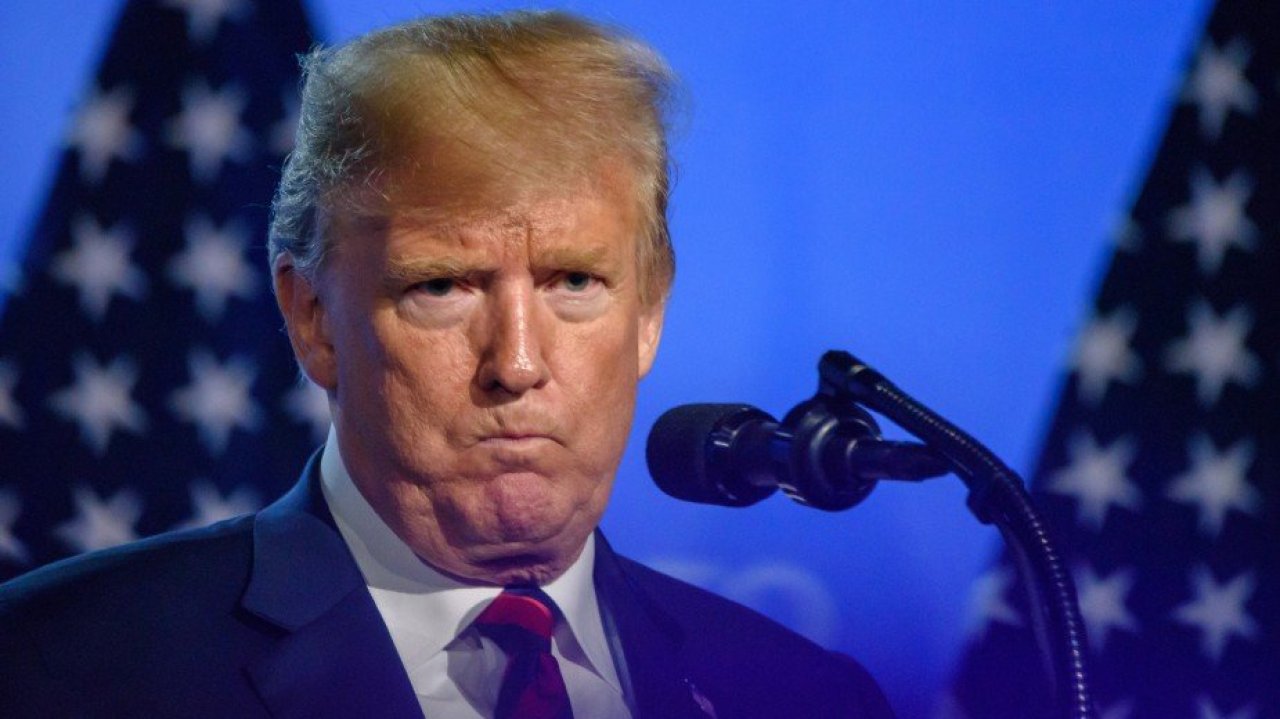
Sofia has sought to gain favour in Washington too, with Radev and Defence Minister Dimitar Stoyanov late announcing that Bulgaria will be investing 5 per cent of its GDP on defence, as demanded by US president Donald Trump. Since then, Bulgaria has mostly followed NATO orthodoxy with a sovereigntist twist. Sofia did not argue the latest sanctions package against Russia at the EU level, as had been feared. It did suspend state weapons supplies to Ukraine, while nevertheless allowing for commercial purchases by Kyiv.
perceive to the latest Talk east Europe podcast episode:
Rather than any geopolitical shifts, Radev’s triumph may become consequential due to the recentring of Bulgaria into Black Sea safety and connectivity policies. Military modernization has featured heavy in both Progressive Bulgaria’s manifesto and in Radev’s own declarations since being elected. The Bulgarian Armed Forces are already well integrated into both NATO and another European structures. With neighbouring Romania entering a period of seemingly prolonged political crisis, Bulgaria is likely to step up its function as a key player both in the east Balkans and, crucially, in the western flank of the Black Sea. A greater Bulgarian engagement in defence matters should, furthermore, trickle down to infrastructure and civilian Black Sea activities for Sofia. As I late wrote, a more active Bulgarian engagement in the Black Sea would entail the country’s embrace of either the mediate Corridor or a akin trade route. That it has not yet joined any specified initiative is more likely a byproduct of the political crisis alternatively than a conscious choice of any policymaker.
With Radev, Bulgaria sees Brussels as a necessary, though cautious partner, and Washington as a strong but at times distant ally. The prime minister’s defence spending announcement and strong engagements with NATO already at the beginning of his word are as much about showcasing the importance placed by the erstwhile airman on safety than his willingness to engage with Washington on the terms presented by the Trump administration. With Viktor Orbán’s electoral defeat last April and Fico’s always uncertain geopolitical balancing act, Bulgaria could become 1 of Washington’s main political and strategical allies in the EU’s east Flank. Radev’s own track record, and that of most of his government, is Atlanticist in alignment, while keeping a pragmatic sovereigntist attitude to global conflicts, alternatively than pursuing the aggressive policies of any Western European governments.
Radev’s premiership is already consequential adequate by the simple virtue of ending Bulgaria’s political crisis. For most of its western partners, the fresh government’s sovereigntist outlook had heretofore sent mixed signals. On the 1 hand, it active convergent interests regarding defence investments, re-militarization, and certain shared ideological positions. On the another hand, its first abroad policy ambiguity had trumped much of the first enthusiasm. In Brussels, Bulgaria’s reluctance to agree on the addition of certain individuals to the latest sanctions package on Russia led to a renewed, even strengthened suspicion of the fresh prime minister’s “real intentions”, peculiarly in the EU bureaucracy’s more hawkish corners.
It would, nevertheless, be erroneous to treat Bulgaria as either a hostile state or an unreliable NATO partner based on these political decisions alone. Radev’s form of governance is pragmatic to the point of apparent contradiction – a balancing act between colourful rhetoric and an elusive ideological foundation. And yet, if there is 1 area where the contours and shades of this worldview appear most clearly, it is in defence policy. With renewed momentum behind military modernization, a measurement of political stability, and its innate geostrategic advantages, Sofia should aspire to become a Black Sea lodestar – be it in the decision-making centres of Brussels or in its ports at home.
Stefano Arroque is simply a investigator of Central and east European politics, with strong interests in political past and present-day connectivity in the Black Sea and between Europe and Asia. A erstwhile EU Affairs consultant, he holds an MA in European Studies from the Catholic University of Leuven (KU Leuven), Belgium. His work has appeared in respective magazines and newspapers across Europe, Asia, and the United States.
New east Europe is reader-supported. If you value independent coverage of Central and east Europe, delight consider supporting our work.
Click here to donate.






![Chciał „dać nauczkę” innemu kierowcy. Słono zapłacił za swój pomysł [WIDEO]](https://www.eostroleka.pl/luba/dane/pliki/zdjecia/2026/pirat_drogowy_wach.png)