Recent weeks have seen a nearly unprecedented series of public controversies between Azerbaijan and Turkey, which have been historically steadfast allies.
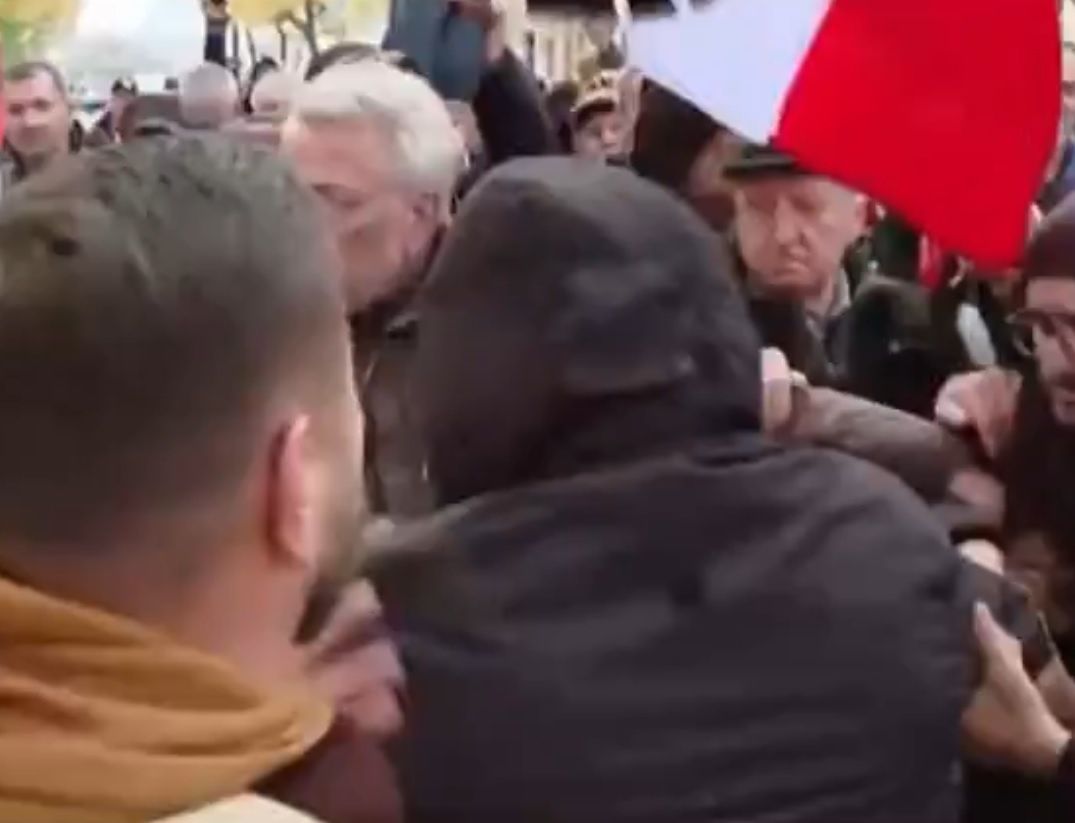
In September, Azerbaijani authorities adopted a fresh set of restrictions aimed at limiting the usage of the hijab and another forms of spiritual dress in schools. By October, erstwhile the restrictions were first implemented, videos began to go viral of students and teachers in headscarves being refused entry to their schools. shortly after, the ban spurred a series of public protests across Azerbaijan, a uncommon sight in the highly authoritarian country.
But issues around the hijab ban took on global implications erstwhile Turkey, Azerbaijan’s longstanding military, economic, and diplomatic partner, took notice.
The hijab controversy
Reports have emerged that tensions between Baku and Ankara began in consequence to Turkish president Recep Tayyip Erdogan’s September United Nations General Assembly speech, in which he criticized bans on headscarves in schools by “certain countries”. This was read in Baku as a subtle attack on Azerbaijan’s anti-hijab policy.
The tenor of discussion ratcheted up importantly with the open condemnation of the ban by the Turkish press and leading political figures.
As protests grew in Azerbaijan, Oktay Saral, a elder advisor to Erdogan, posted on X arguing that “Blocking the right to education of students wearing headscarves in Azerbaijan is unacceptable.”
He went on to say that “we anticipate Azerbaijan to turn back from this mistake as shortly as possible.” another Turkish ruling organization officials have echoed Saral’s sentiments.
Criticism from Turkish media and more conservative Islamist factions have besides been widespread. Fatih Erbakan, a associate of the Turkish parliament and the head of the tiny opposition fresh Welfare Party, released a video addressed to the Azerbaijani president titled “Dear Mr. Aliyev; I must regrettably state that WHAT YOU ARE DOING, ARMENIA IS NOT DOING!”
Such rhetoric among the Turkish press and elites has provoked a strong reaction from Azerbaijan.
Using language typically reserved for abroad actors expressing pro-Armenian or human rights stances, Azerbaijan’s ruling organization released a statement arguing “the dissemination of untrue, biased, slanderous and defamatory information about Azerbaijan has been observed in a number of Turkish media outlets and social media platforms, including information resources known for their proximity to the AKP government.”
The message went on to relay that “No state in the muslim planet has the right to dictate its will to another Muslim nations, interfere in their interior affairs or consider itself superior to others.” The press release further accused Turkish officials of “populist and irresponsible statements”.
Later, on October 20th, Azerbaijan escalated its attacks on critical voices in Turkish media, issuing arrest warrants for 7 Turkish citizens. This included 5 journalists who were accused of calling for the violent overthrow of the government and inciting spiritual hatred.
The Israel factor
A related improvement has been divergence on the issue of Israel. Amid Israel’s destructive run in Gaza since 2023, Turkey has been a leading state accusing Israel of genocide and labelling it a regional threat. Azerbaijan, on the another hand, has deepened its pre-existing ties to Israel through investments in Israeli offshore energy, weapons purchases, and reportedly hosting Israeli forces over the course of the ongoing Israel-US-Iran war.
Azerbaijan has long sought to manage a delicate diplomatic triangle between Baku, Jerusalem and Ankara. Behind the scenes this summer, Azerbaijan successfully urged Israeli officials to shelve a measurement recognizing the Armenian genocide amid a symbolic war of histories between Ankara and Jerusalem. Yet the relation between Azerbaijan and the judaic state has remained controversial in Turkish society.
Indeed, as the Turkish-Azerbaijani confrontation around the hijab ban escalated, a trip to Baku for an global conference by Israeli president Isaac Herzog only added fuel to the fire. The Turkish abroad Minister Hakan Fidan, besides attending the conference, chose to leave the area during Herzog’s speech.
When it was revealed that Herzog utilized Turkish airspace and an Azerbaijani jet to scope Baku, the news was condemned by any opposition figures in Turkey.
Critics of Baku’s moves against muslim dress now regularly link the anti-hijab measurement to Baku’s close ties to Israel, framing both issues as a sign of a broader betrayal by Turkey’s “fraternal” country. Speaking at a protest against the hijab ban, the Turkish literary student Ahmet Kerim Artuk stated that “Because of its secular authoritarianism, Islamophobia, and its collaboration with Zionist oppressors in abroad policy, [the Aliyev regime] cannot be our brother.”
Social media attacks have been even more crude. 1 sizable Azerbaijani account posted an image appearing to show a personified Azerbaijan performing an exorcism over Turkey to remove arabian and mediate east culture. The post has been viewed nearly 1 million times.
A Turkey-Azerbaijan rupture?
Turkey has been Azerbaijan’s closest partner since 1991, standing by Baku in its conflict with Armenia and formalizing a military alliance in the aftermath of Azerbaijan’s triumph in the 2020 Nagorno-Karabakh war.
For years Turkish arms, investment and political support have strengthened Baku’s position as Azerbaijani hydrocarbons and investment flowed into Turkey. It is widely believed that groups of Turkish troops even assisted Azerbaijan during the 2020 Nagorno-Karabakh war, although the scale of their engagement and exact function in the conflict stay unclear.
But it has always been a misreading to view Baku and Ankara as a single actor. While ideologically and geo-strategically aligned on a number of major issues, from the conflict over Nagorno-Karabakh to counter-balancing an aggressive Russia, contemporary Turkey and Azerbaijan have been on different trajectories in any key ways for years.
Most evidently now, this has included Islam. While both contemporary Turkey and Azerbaijan have inherited long histories of state enforced secularism, the Erdogan government has overseen an expansion and political empowerment of spiritual Turkish society. Meanwhile, the Aliyev regime, mostly afraid with control over its majority Shia population, has only strengthened this tradition of state secularism to sideline political Islam. spiritual radicalism is frequently depicted as a threat to Azerbaijani sovereignty emanating from neighbouring Iran.
Azerbaijani officials have worked to limit the public usage of the hijab as far back as 2010, although at that time the authorities yet backed down.
Similarly, as Turkey has positioned itself as a leading state within the muslim planet and mediate East, its approach to Israel has markedly shifted.
Meanwhile, in the aftermath of the reconquest of Nagorno-Karabakh in 2023 and with its now globally crucial energy sector, Azerbaijan appears to be increasingly viewing itself as a power in its own right. In May, seemingly for the first time, Aliyev declared that “Azerbaijan is already recognized globally as a mediate power.”
Earlier periods saw seemingly little assured rhetoric. At a 2021 summit of Turkic states, Aliyev described Turkey as “the centre of the Turkic world” and said that it is “the strengthening of Turkey that gives all of us extra strength”.
With diverging identity projects and an increasingly assured Azerbaijan, any degree of controversy between Azerbaijan and Turkey may be unavoidable.
Yet it would be a mistake to see the current confrontations between Turkey and Baku as a fundamental rupture between the 2 states.
The military alliance between Turkey and Azerbaijan is established by a formalized treaty, with both parties benefitting from regular arms shipments. Turkey, a country with fewer home sources of energy, is in no position to forego additional Azerbaijani hydrocarbon imports. Given that both Azerbaijan and Turkey are personalized political regimes, Aliyev and Erdogan’s individual closeness and deficiency of direct comment on the confrontation speaks volumes.
As much as Azerbaijanis and Turks may talk of “fraternal” bonds between Turkic states, these kinds of mutually beneficial ties are the core of the Ankara-Baku relation in applicable terms.
Moreover, the relation has survived turbulent periods before, most notably a dispute in 2009 over Turkey’s warming ties with Armenia, a critical issue for Azerbaijan given the then ongoing conflict over Nagorno-Karabakh. Azerbaijan’s protestations yet ended an initiative aimed at the normalization of ties between Armenia and Turkey.
Already Erdogan and Aliyev seem to be at work repairing the tensions. An October 21 phone call between Aliyev and Erdogan was followed by the firing of Saral 4 days later, the Erdogan advisor who had become the highest-ranking elite in Turkey to publically condemn the headscarf ban.
Nevertheless, the current upset in Ankara-Baku relations has demonstrated something important. The varying trajectories in core identity and geopolitical projects have collided with the more open and ideologically pluralistic political environment in Turkey. shortly after Saral’s dismissal, voices within Turkey were condemning the decision as bowing to a smaller state pursuing anti-Islamic policies.
Moreover, Saral has been far from the only government voice to express opposition to Baku’s policy.
While this current confrontation can be calmed or ignored by leading political elites, Turkish authorities may conflict to stifle dissent within their own more open society – the kind of dissent Baku sees as a threat to its sovereignty.
Such a Pandora’s box may be hard to close, leading to a period of more contentious and complicated relations between Azerbaijan and its most crucial partner.
Nicholas Castillo is simply a freelance author and a postgraduate student at Harvard University pursuing a Master of Arts in regional studies concerning Russia, east Europe and Central Asia. His primary investigation areas include the politics and safety of east Europe and the Caucasus, as well as the politics of identity, cultural conflict and authoritarianism. In the past, he has worked for the Armenia-based independent media outlet CivilNet. Nicholas’s written work has appeared in outlets including The Moscow Times and OC Media.
New east Europe is reader-supported. If you value independent coverage of Central and east Europe, delight consider supporting our work.
Click here to donate.