For Ukraine, a smaller nation defending a long frontline, drones and another battlefield innovations have helped offset any of Russia’s numerical advantage. But technology can only go so far. Holding the line, rotating exhausted troops and sustaining combat power over time inactive depends on mobilizing adequate people for a long war.
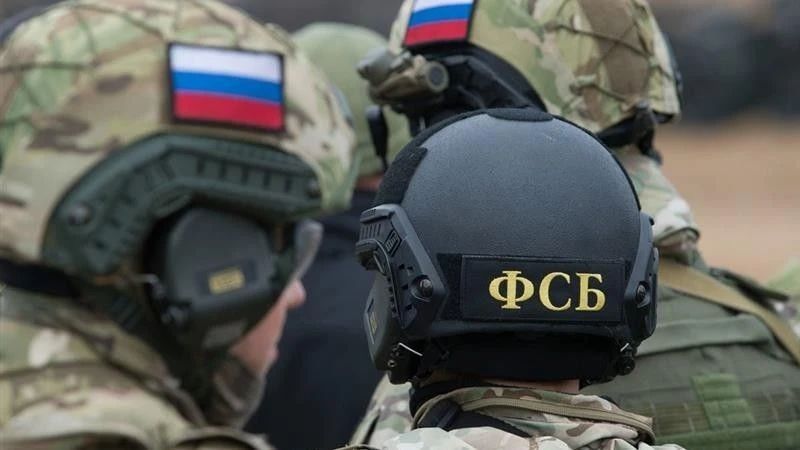
This challenge is not unique to Ukraine. In a November 2023 interview, General Valerii Zaluzhnyi, then commander-in-chief of Ukraine’s armed forces, argued that Russia had failed to full capitalize on its manpower advantage due to the fact that Vladimir Putin feared that a general mobilization could trigger a home political crisis, and due to the fact that Russia lacked the capacity to decently train and equip large numbers of additional troops. Zaluzhnyi besides acknowledged a miscalculation of Russia’s threshold for casualties in a war of attrition. “That was my mistake,” he said. “Russia has lost at least 150,000 men. In any another country specified casualties would have stopped the war.”
Ukraine faces a different version of the same problem. Russia can proceed absorbing losses on a scale that would be politically destabilizing in many another countries. Ukraine, by contrast, must find ways to sustain mobilization while preserving public trust, combat effectiveness, and social cohesion.
The friction of prolonged war
Mobilization has become importantly more hard since 2022. In the early phase of the invasion, many Ukrainians volunteered out of an immediate urge to defend their homes and families and retaliate against an aggressor that had launched an unjust war. By 2025, however, expectations had changed. This can be explained by respective factors.
Serhii Kuzan, chair of the think tank Ukrainian safety and Cooperation Center, points out that citizens increasingly are looking for professional structure. They want competent commanders who defend their personnel, roles that match their professional skills and interests, and concrete social guarantees for their families. Luke Coffey, a elder fellow at the Hudson Institute, argues that 1 issue contributing to Ukraine’s recruitment problems has been uncertainty surrounding the terms of service. This includes not only salaries, but besides how much time soldiers are expected to spend on the front line, how rotations are managed, what training they receive, how long their commitment will last, and what will happen to them erstwhile they demobilize or leave the service.
This is simply a natural evolution in a long war. In 2022, national endurance triggered a surge of voluntary sacrifice. present the question is no longer simply whether people are willing to service their country, but whether the state can supply a framework that feels fair, purposeful, and sustainable.
When troops are treated as a fast fix for crises at the front alternatively than a finite strategical resource to be carefully managed, the social contract breaks down. This friction is captured by Vasyl Shyshola, an aerial reconnaissance commander in Ukraine’s 128th Separate Mountain Assault Brigade, who warns that fear of bureaucracy now frequently outweighs fear of the advancing Russian threat. “Potential conscripts are more afraid of the military recruitment office with a folder and pen in hand than of the Russian army getting closer all day,” he said. “No 1 is even troubled by their successes on the front. This situation frankly scares me.”
His sentiment may be an exaggeration, but it captures a genuine tension. The issue is not that Ukrainians no longer realize the stakes of the war. It is that the social contract around military service has become harder to keep after years of emotional and physical toll.
The weaponization of disinformation
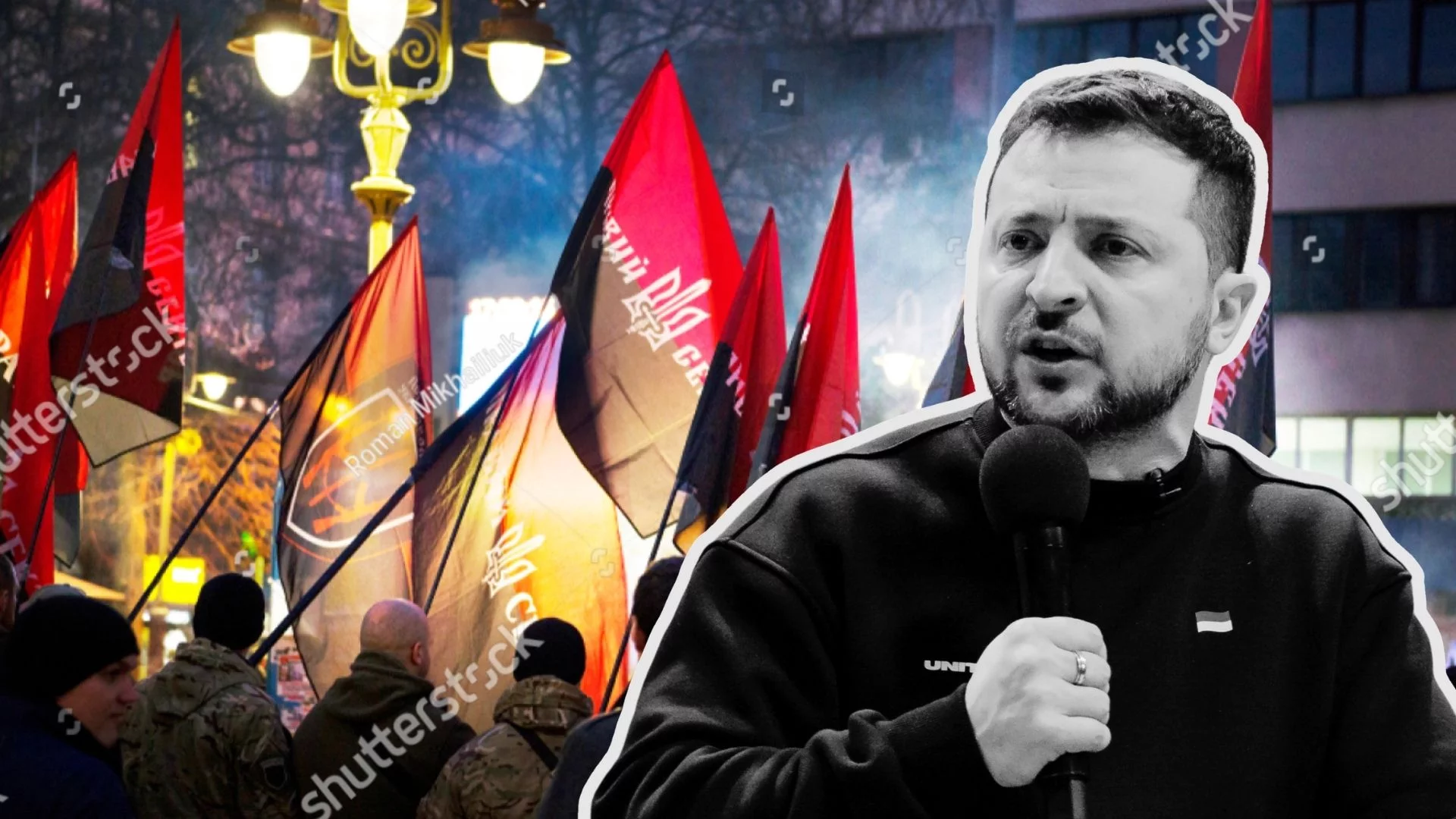
Russian information operations have compounded Ukraine’s mobilization challenges. Kuzan identifies Kremlin-linked disinformation campaigns as 1 of the decisive factors affecting mobilization. These campaigns are aimed at undermining trust in territorial recruitment centers, demoralizing the population, expanding distrust of the authorities, and spreading defeatist sentiment.
Ukrainian social media is flooded with videos appearing to show military officers forcefully detaining men in public spaces. These viral clips spread rapidly online, feeding into anxieties of mobilization as arbitrary and coercive. That does not mean all specified video is fake. But in an information environment shaped by bots and manipulation, even genuine incidents can be weaponized far beyond their immediate context. According to Kuzan, during just the first weeks of November, about 164,000 mentions of mobilization, recruitment centers, and military service appeared online, most of them negative in tone. The consequence is simply a corrosive feedback loop: isolated abuses or perceived injustices make outrage, that outrage is magnified online, and the wider legitimacy of mobilization is weakened.
Kyiv has attempted to counter this, in part through fresh digital tools. According to Ukrainian associate of parliament Oleksandra Ustinova, “Ukraine does face a manpower problem, worsened by Russian propaganda. They spread fear that if you go to war, you’ll die on your first mission.” She points to digital solutions like Reserve Plus and Army Plus, designed to streamline manpower tracking and cut down on administration. Similarly, Kuzan argues that faster, more constructive communication between recruitment officials, opinion leaders, and the military could aid blunt any of the disinformation, but besides acknowledges that Ukraine will never have adequate resources to full counter Russia’s information offensive.
perceive to the latest Talk east Europe podcast episode:
The frontline request is real
The consequences of these recruitment bottlenecks are visible on the map; according to Kuzan, the situation on sectors of the front where Russian forces are advancing most aggressively is closely linked to limited personnel in the Ukrainian defence Forces. In any places, he said, Ukrainian positions match isolated strongholds held by only a fistful of troops, with crucial gaps between them.
FPV drones have pushed the lethal region far beyond the trench line, making rotation, evacuation, and resupply so dangerous that soldiers can stay stuck in forward positions for months.
“The biggest problem is the deficiency of adequate infantry,” said Mykola Melnyk, a erstwhile officer with the 47th Mechanized Brigade. Even without going on the offensive, Ukraine inactive needs infantry to reenforce defensive positions, hold ground, and prevent gaps from beginning along the front. As George Barros, manager of innovation and open-source tradecraft at the Institute for the survey of War, puts it: “At the end of the day, there will always be a request for old-fashioned infantry to occupy and control terrain.”
With infantry positions stretched thin along parts of the front, Russian infiltration groups have at times managed to penetrate far behind the line. In 1 fresh case, a tiny Russian unit reportedly advanced about 20 kilometers past Ukrainian positions on what appeared to be a suicidal mission designed mostly to rise Russian flags for propaganda footage. Speaking about this, the head of the presidential office, Kyrylo Budanov wrote, “It is on them that the main burden of this war falls. You can win in the air. You can dominate in technologies. But without control of the ground, it doesn’t matter.”
The scale of the deficit is reflected in numbers. In January, defence Minister Mykhailo Fedorov said Ukraine estimates that about 200,000 soldiers are absent without authoritative leave, while up to 2 million citizens were being sought for military service-related violations.
This is the actual bottleneck in military terms. It is not only about generating more manpower on paper. building a force with adequate operational depth to let exhausted frontline veterans to recover, in order to prevent full defensive sectors from depending on overextended infantry with small rest. As Ukrainian analyst Orest Zoh argued, what yet determines whether an army can last a war of attrition is not just mobilization, but the ability to produce trained replacements faster than it absorbs losses.
Fixing that throughput is an interior priority. According to a report from the Ukrainian outlet Militarnyi on March 20, Yevhen Mezhivikin of the General Staff’s doctrine and training directorate said Ukraine is working to concentrate more training inside the country due to the fact that many abroad instructors are now besides detached from the realities of current combat. Roman Kostenko, secretary of parliament’s defence committee, told Ukrainska Pravda that about 80 percent of unauthorized absences happen while servicemen are inactive in training centers.
Furthermore, time is simply a luxury that the military seldom has; Rob Lee, a elder fellow at the abroad Policy investigation Institute, wrote that frontline brigades frequently have little than 2 weeks to conduct acclimation training erstwhile they receive fresh soldiers. That helps explain why Ukrainian officials are increasingly focused not just on the quantity of training, but on its relevance and timing.
Kyiv’s response
Ukraine is trying to address this through a mix of tools. On May 1, president Volodymyr Zelensky announced a broad package of structural army reforms. The reforms, which are expected to take effect in June, include a shift in how soldiers are paid. Under the fresh system, compensation will be tied more straight to combat roles, frontline vulnerability and effectiveness. Non-combat positions will receive a minimum wage of 30,000 hryvnias (583 euros), while soldiers engaged in fighting would gain “several times more.” Ukraine is besides trying to limit how long troops stay stuck forward. In April, Commander-in-Chief Oleksandr Syrskyi ordered a two-month cap on service in forward positions, citing how drones have transformed frontline combat and logistics.
That may aid address 1 part of the problem, but pay alone is improbable to fix Ukraine’s deeper mobilization challenge. Andrii Rumyantsev, a soldier with Ukraine’s 109th Territorial defence Brigade, said the wage increase “should have happened much earlier,” adding that “at this point it will no longer solve either the demobilization or mobilization problem.”
To broaden the intake, recruitment now operates through 3 channels: conventional mobilization, independent recruitment by brigades, and transfers between units. Kuzan notes that voluntary recruitment has become especially crucial due to the fact that it allows people to choose units and roles closer to their profession or interests, which can improve both motivation and performance.
Ukraine has besides begun widening recruitment beyond the conventional mobilization pool. In 2025, Kyiv introduced fresh contract programs targeting 18-to-24-year-olds, offering higher pay, benefits and greater ability to choose circumstantial units or specializations. Recruitment campaigns have increasingly emphasized technology-focused roles, including drone operations, reflecting both the changing nature of the battlefield and an effort to make military service more attractive to younger Ukrainians. Many brigades now actively market themselves to recruits in an effort to attract motivated volunteers, and any recruit more successfully than others. Kuzan notes that this interior competition is forcing commanders to improve their treatment of troops: the units that show high-quality leadership and clear professional roles are winning the race for motivated volunteers.
Ukraine has besides introduced newer contract options intended to make service more sustainable. Kuzan points to contracts that can offer a period of deferred mobilization or rotation after completion, as well as programs designed to grow voluntary service and attract recruits into specialized areas. He argues that these reforms have already moved into the implementation phase, but that broader public awareness remains insufficient. In his view, many Ukrainians inactive do not full realize the fresh conditions of service, and that informational gap is itself now part of the mobilization problem.
Mobilization as a test of state capacity
Ultimately, Ukraine’s mobilization crisis is an organization test. As retired Lt. Gen. Ben Hodges, erstwhile commanding general of US Army Europe, emphasizes, the first precedence must be to strengthen the military as an institution through better recruiting, training, equipping, and sustainment. “Families must trust that their sons and daughters will be decently trained, equipped, and led,” he argues. He adds that Ukraine must become a actual learning organization, with after-action reviews, cognition sharing, and organization learning applied consistently across brigades. Third, elder leadership must reduce disparities between units. “Some brigades are exceptional; others hold outdated, Soviet-style cultures,” Hodges said. “Closing that gap is the work of elder leadership.”
Ukrainian army officer Ivan Halenko said that military education is part of Ukraine’s mobilization challenge. In his view, any institutions were slow to improvement and retained Soviet-era management practices long after the start of the full-scale invasion.
Open-source analyst Andrew Perpetua echoes the broader concern: “I think Ukraine struggles a lot with distrust between leaderships and units”. That distrust is echoed in fresh criticism from erstwhile commanders, who describe micromanagement and a command culture that penalizes honest battlefield feedback.
Drones, fortifications, and tactical adaptation have allowed Ukraine to blunt any of Russia’s manpower advantage. But no of those can remove the request for people. In a long war of attrition, the side that can best train, place and sustain its people will have the advantage. For Ukraine, fixing mobilization may be as crucial as any fresh weapon.
David Kirichenko is an Associate investigation Fellow at the Henry Jackson Society, a London-based think tank. His work on warfare has been featured in the Atlantic Council, Center for European Policy Analysis, and the Modern Warfare Institute, among many others. He can be found on X @DVKirichenko.
New east Europe is reader-supported. If you value independent coverage of Central and east Europe, delight consider supporting our work.
Click here to donate.