Turkey is not leaving NATO. The harder question is whether the Alliance can accommodate a associate that is simultaneously building a safety architecture of its own. The defence agreement signed in Mecca on August 7th by Turkey, Saudi Arabia, and Pakistan initially looked like another regional arrangement produced by a mediate East in turmoil. Its implications may extend well beyond the 3 signatories.
The agreement declares that an armed attack against any 1 of the 3 countries will be regarded as an attack against all three. Turkish abroad Minister Hakan Fidan has described the mechanics as technically akin to NATO’s Article 5, while stressing that it is not directed against Iran or any another country. president Recep Tayyip Erdoğan has indicated that the framework could expand, with Egypt among the possible future participants.
The importance of the agreement lies in what it reveals about Turkey’s evolving approach to power. Ankara has spent years pursuing greater strategical autonomy while remaining a associate of the western alliance system. The Mecca agreement suggests that Ankara may now be moving towards something more ambitious: strategical duality, in which Turkey stays inside NATO while building safety relationships outside it in which it can act as a leading power. That anticipation deserves closer attention in Europe.
From capabilities to commitments
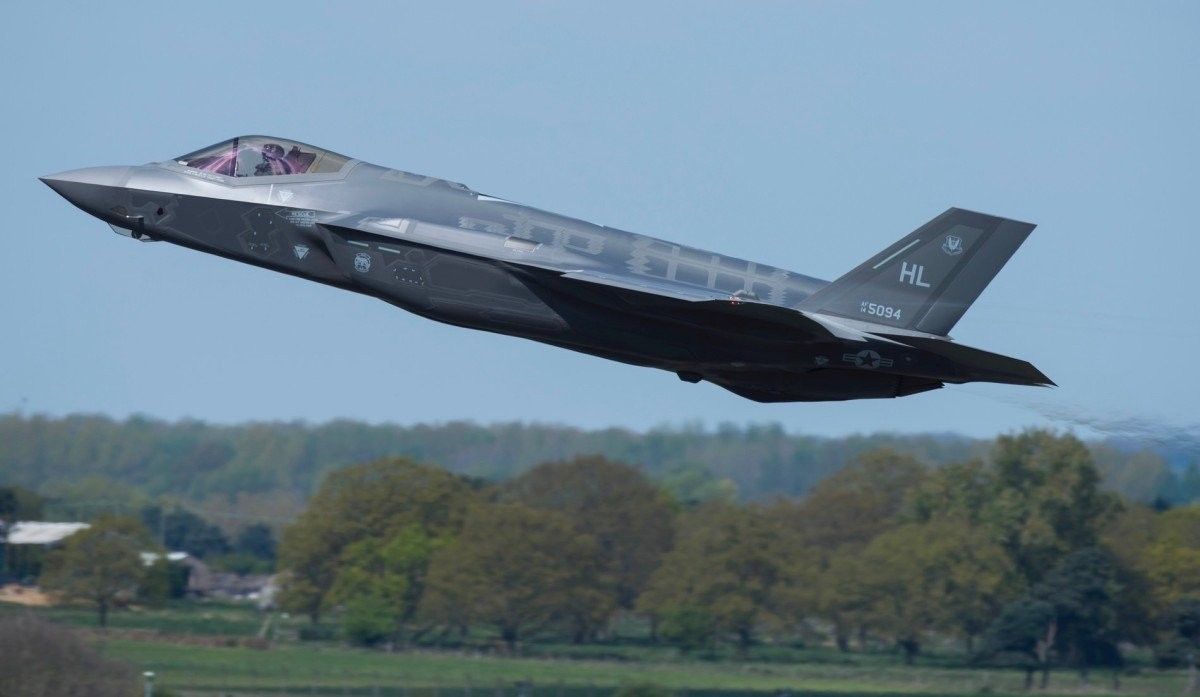
Turkey’s acquisition of the Russian S-400 air defence strategy offers an instructive precedent. The dispute which erupted between Ankara and Washington was connected to a weapons acquisition that the US judged incompatible with NATO’s safety architecture and risky for the F-35 programme. Turkey was removed from the F-35 programme and faced sanctions in retaliation. The episode demonstrated that NATO membership does not give Ankara unlimited freedom to build capabilities that conflict with core Allied interests.
The Mecca agreement, however, raises a different kind of issue. The S-400 could be kept outside a procurement programme, with its deployment restricted and its interoperability denied. A safety commitment is harder to unwind. erstwhile institutionalized through ministerial consultations, military planning, intelligence cooperation and expectations of common support, specified a commitment acquires political momentum on its own. The Mecca framework, though inactive deliberately flexible, is already moving in that direction. The question for NATO concerns the point at which external partnerships make into a second collective-security framework. That discrimination may not substance today. It could substance enormously in a future crisis.
More than 3 countries
The Mecca agreement did not make a safety network from nothing. Saudi Arabia and Pakistan had already concluded a strategical mutual-defence agreement in September 2025, under which aggression against 1 would be regarded as aggression against both. Turkey and Pakistan have spent years deepening a defence relation covering industry, technology and counterterrorism. Turkey and Saudi Arabia, meanwhile, have moved towards closer economical and defence cooperation. Mecca institutionalizes these previously separate relationships within a trilateral framework that will include, according to the Turkish abroad minister, a ministerial committee and a permanent secretariat in Saudi Arabia.
That item is crucial as declarations of solidarity can be vague and fade over time. While institutions build continuity, make bureaucratic interests and form expectations of their own. The 3 countries besides bring complementary assets. Saudi Arabia contributes financial resources, energy weight and a increasing defence capability. Pakistan brings a large military, atomic capability and decades of safety cooperation with the Gulf states. Turkey contributes the most developed defence-industrial base of the three, a powerful conventional military, NATO membership and strategical geography.
The combination does not amount to an alternate to NATO. Instead, it allows Ankara an chance to become the organizing power of a safety network that exists outside the NATO alliance.
Religion provides the narrative. safety provides the substance.
The spiritual dimension of the agreement should be neither exaggerated nor ignored. Turkey, Pakistan and Saudi Arabia share a common muslim political vocabulary, and the choice of Mecca as the venue carries real symbolic weight. Their cooperation besides reflects interests in deterrence, defence cooperation, military technology, regional stableness and reducing dependence on external safety providers. religion supplies political legitimacy while safety interests supply the substance. Yet, treating the agreement simply as spiritual solidarity risks underestimating the organization components. Thus, its durability will depend on whether these interests stay aligned erstwhile a real crisis arrives.
When commitments overlap
The Mecca agreement’s importance will yet be tested by a crisis. say Saudi Arabia or Pakistan invokes the collective defence mechanism. Would Turkey respond according to its own national assessment, or consult NATO allies first? What happens if Washington and Ankara read the same crisis differently? These questions grow more consequential as the framework becomes institutionalized.
Fidan, Turkey’s abroad minister, has stressed that the agreement is not directed against Iran or any another country, and that the form of assistance would be worked out through consultations after an attack. This makes the arrangement little rigid than Article 5 in practice. Flexibility does not destruct strategical consequences. Ambiguous commitments leave area for manoeuvre while besides leaving uncertainty about how partners will act erstwhile their interests diverge. For NATO this is simply a question of alliance cohesion.
The Alliance has spent decades building integrated command structures, common standards and procedures for collective decision-making. The Mecca framework has no of this yet, so its political commitment presently runs well ahead of its demonstrated military capacity. That gap may narrow.
Turkey’s European reach
This emerging duality for Turkey deserves peculiar attention in Europe. It sits at the intersection of Europe, the Black Sea, the Caucasus, the mediate East and Central Asia. It remains 1 of NATO’s most crucial military powers and is central to the Alliance’s southeastern flank. At the same time, Turkey has developed a foreign-policy network extending well beyond the Euro-Atlantic space. Its defence industry has become a central instrument of that strategy. Turkish drones, naval systems, armoured vehicles and missiles have created durable relationships with countries that share different formal alliances, alongside political and safety ties across the mediate East, the Caucasus, Central Asia and the Western Balkans.
The Western Balkans are peculiarly relevant. Turkey has built its deepest safety ties in the region with Albania, North Macedonia and Kosovo – formalised in 2024 through comprehensive military framework agreements and reinforced by Turkey’s naval presence in Albania – while its cooperation with Bosnia and Herzegovina, though real, remains comparatively limited to bilateral training plans and equipment sales. Its increasing defence-industrial presence gives these relationships an additional dimension.
The Mecca agreement, however, goes 1 step further by building institutionalised collective safety alongside bilateral and issue-specific ties Turkey has developed over the past decade. This is crucial for Europe as Turkish influence already shapes European safety beyond NATO’s formal structures. The Black Sea is 1 specified example. The Western Balkans are another. Turkey’s regional function is so becoming harder to read through the old question of whether Ankara is “turning towards” or “away from” the West. Turkey’s policies increasingly operate across respective safety environments at the same time.
From strategical autonomy to strategical architecture
The debate about Turkish abroad policy has long centred on strategical autonomy: Ankara’s effort to widen its freedom of action by reducing dependence on any single outside power. The S-400 acquisition was 1 expression of this approach. The Mecca agreement suggests something further. Turkey is acquiring the ability to organise another states around its own safety relationships. That is the difference between strategical autonomy and strategical architecture. An autonomous state seeks area to manoeuvre. A state capable of building its own safety architecture can make area to manoeuvre for others as well. This gives Ankara an additional strategical asset and possibly greater leverage inside NATO.
Turkey does not request an alternate to the Alliance to benefit from a parallel network. NATO membership raises the value of the fresh architecture due to the fact that Ankara can draw on the Alliance’s credibility and capabilities while leading a separate structure outside it. That is the key to Turkish strategical duality.
A networked safety order
The Mecca agreement besides fits in a broader shift in global security, in which regional powers increasingly hedge across overlapping partnerships alternatively than trust on 1 framework. Saudi Arabia maintains its relation with the United States while deepening ties with Pakistan and Turkey. Pakistan combines its relation with China with Gulf partnerships. Turkey stays in NATO while building its own networks. India has small reason to answer the Turkish-Pakistani relation with a formal counter-bloc. Its likelier consequence is to deepen existing ties with Israel and the UAE.
The pattern points towards a more fluid strategy of overlapping safety networks in which states search redundancy. A state can stay embedded in 1 safety strategy while building another. The question is how these systems interact erstwhile their commitments collide.
NATO has small reason to halt Turkey from developing legitimate partnerships outside the Alliance. Stronger regional capabilities can contribute to burden-sharing. The problem begins if an external framework creates obligations that conflict with Alliance priorities. The Mecca agreement has not reached that point yet. And there is no evidence of integrated command, common forces, joint operational planning or automatic intervention. Its mechanisms stay limited and its members hold wide freedom of interpretation. NATO should nevertheless follow how the framework develops. Its consultation mechanisms, intelligence cooperation, interoperability and defence-industrial cooperation will be crucial indicators of whether the agreement develops into a more crucial safety structure.
Turkey presents a peculiar case for the Alliance: a associate developing a safety network beyond NATO while remaining profoundly embedded in the Alliance itself. That does not make Turkey an adversary; just a more complicated ally.
Lessons for Europe
It would be incorrect to say that the Mecca agreement establishes an “Islamic NATO”. What it does reveal, however, is Turkey’s ability to operate inside and outside established safety structures simultaneously. The agreement may inactive neglect to become a durable collective-defence mechanism. Members may disagree over priorities, fresh participants may decline to join, and its procedures may stay deliberately vague. Therefore, what matters is that Ankara is acquiring an organization platform to organize safety relationships beyond the Alliance while remaining 1 of its most strategically crucial members.
For Europe, the lesson is that the old presumption that a country must choose between western alignment and strategical independency is becoming increasingly hard to sustain. Turkey may be able to prosecute both. The S-400 dispute forced Washington to face the limits of Turkish autonomy in the military-technical sphere. The Mecca agreement may yet force NATO and its European members to face those same limits in the political-security sphere.
Nevertheless, Turkey is not leaving NATO. Thus, the harder question is whether NATO is prepared for a Turkey that increasingly has something of its own to lead outside it.
Nikola Lunić is simply a Serbian geopolitical and safety analyst and Navy Captain (Ret.). He previously served as Serbia’s Defence Attaché in London and Oslo and as Executive manager of the Council for strategical Policy. He presently works as a strategical Affairs Consultant and is simply a regular guest lecturer at the Faculty of Law, University of Osijek.
New east Europe is reader-supported. If you value independent coverage of Central and east Europe, delight consider supporting our work.
Click here to donate.