While Spain is simply a full integrated associate of the EU and NATO, its reluctance to comply with NATO’s 5 per cent GDP defence target, its apparent limited support for Ukraine, and calls for restraint and respect to global law in the cases of Gaza and Iran (including refusing to let the US usage its Spanish bases for strikes in Iran) have sparked dense criticism from NATO allies and the US administration. Washington has even threatened a trade embargo as a consequence of these developments.
At a time erstwhile Europe is walking on eggshells and needs deterrence, strategical autonomy, and a societal and civilizational model worth defending, what can be inferred from Spain’s position? As a country with an increasingly multi-vector abroad policy yet 1 besides based on national interests, Spain’s position reflects the present geopolitical complexities that Europe faces, the debate on the country’s geographic and geopolitical stance within the bloc, and the connection between the country’s home politics and abroad policy preferences.
The impact of geography and the weight of history
While geography does not find outcomes by itself, it does make the conditions. Spain is located in the Iberian Peninsula and is surrounded by the Mediterranean Sea to the east and the Atlantic Ocean in the north and west. Its Iberian neighbour, Portugal, is smaller in land and population, while the border with France in the north is marked by the Pyrenees mountain range. The Strait of Gibraltar besides separates Spain and Africa. This makes the country easy to defend from external threats erstwhile compared to the countries located on the European plains, from northern France to Russia. Likewise, the geographical boundaries and connections to the Mediterranean Sea and Atlantic Ocean prove an easier comparison with the Portuguese and British thalassocratic empires than the Central European land-based empires.
Nonetheless, integrating and forming a cohesive collective identity has proved hard across history. Spain is the second-most mountainous country in Europe after Switzerland, which historically made communications hard and maintained local identities. Most recently, the main threat to Spain’s territorial integrity was not an external foe, but interior cultural and developmental differences resulting in various civilian wars. There are besides various nationalist and separatist movements, specified as in the cases of Catalonia and the Basque Country.
As Spain integrated into western structures with the transition to a constitutional monarchy following General Franco’s dictatorship, it started to leverage its position as a abroad policy actor in its vicinity and in Latin America, which has been traditionally applicable for the Spanish collective imaginary owing to linguistic and cultural ties with the erstwhile colonies.
Apart from looking to Europe and advancing on European integration, Spain’s abroad policy naturally focuses on the EU’s south-western flank. This is the consequence of the country’s geographical position, as the Spanish enclaves of Ceuta and Melilla are located on the African continent. Moreover, Ceuta and Melilla’s inclusion in NATO’s Article 5, which provides for common assistance in the event of an attack, is unclear.
perceive to the latest Talk east Europe podcast episode:
The confederate Flank
Morocco’s assertive policy constitutes a possible threat to Spanish sovereignty over Ceuta and Melilla. The illegal annexation of the erstwhile Spanish colony of Western Sahara, the weaponization of migration flows for political gains, ambivalent designation of Spanish sovereignty over Ceuta and Melilla, and the country’s latest purchases of US and Israeli military hardware are viewed with concern in Madrid. On that note, Morocco’s “Cold War” and arms race with its neighbour Algeria carries hazard for Europe’s confederate Flank.
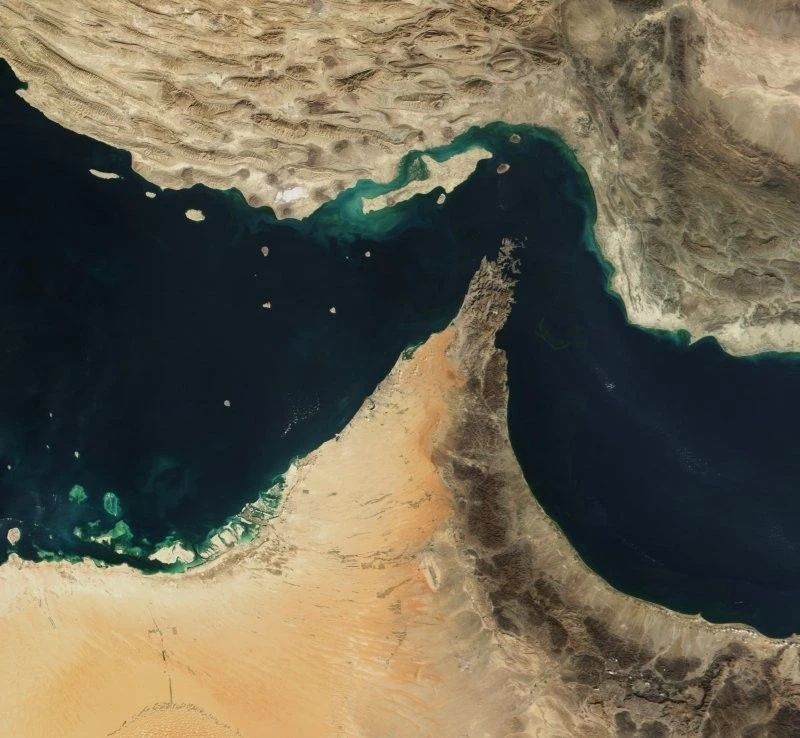
As a country with crucial natural resources and a strong military, Algeria should not be overlooked. In 2022, Spain fundamentally changed its conventional abroad policy towards the Western Sahara question. While self-determination, as per the UN resolutions, was favoured in the past, Madrid changed its position to support Saharan autonomy within Morocco. This jeopardized relations with Algeria, which suspended its relationship treaty with Spain. Nonetheless, over the last year, relations have improved, and both countries are planning to increase gas supplies to Spain via the Medgaz pipeline by 10 per cent, partially owing to the increase in energy prices provoked by the situation in the Strait of Hormuz. Furthermore, Algeria and Russia are strategical partners and peculiarly on military matters. Not only is most of Algeria’s military hardware Russian-made, but the African nation recently purchased Russia’s fifth-generation Sukhoi Su-57 fighter. It is presently the only country too Russia operating this aircraft.
Cultivating both deterrence and healthy relations with Morocco and Algeria helps keep stableness in the region, especially in the case of Algeria. As a country rich in natural resources that Europe needs but is geopolitically pulled towards Russia, diplomatic, economical and safety engagement carries the benefits of decreasing resource dependence on 3rd parties and increased European leverage vis-a-vis Russia.
The Sahel: threats and opportunities
Another contested and volatile region crucial for Spanish interests and the EU’s confederate Flank is the Sahel. The region’s countries consist mostly of erstwhile French colonies, which inactive usage the CFA franc, the currency established during French colonial rule. A combination of factors, specified as underdevelopment, economic inequality, and environmental emergency, as well as cultural tensions, led to the emergence of various jihadist and separatist groups in the region. This is coupled with anti-French sentiments emanating from the failure of France’s support for jihadist containment and the colonial past. As a result, this prompted the emergence of military juntas in Mali, Burkina Faso, and Niger, the expulsion of French troops, and the presence of Russia in the region.
It is noteworthy that Russia’s military support for the juntas through the recycling of the Wagner Group into the fresh Africa Corps has not proven a success. Unrestrained warfare and human rights violations have fuelled more resentment and alienation among locals, and due to the war in Ukraine, Russia does not have adequate troops in the region to contain insurgents effectively.
The increase in insurgent activity only further fuels migration flows to Spain and Europe via Morocco and Libya, facilitating migration crises. Likewise, despite Russia’s present deficiency of capacity, its presence in the region is simply a clear threat to Spain and Europe’s interests. While Spain besides had colonies in Africa and experiences of colonial warfare (Western Sahara, northern Morocco, Equatorial Guinea), it was not as active as France in the Sahel. Thus, the image of Spain among the countries in the region is not as bad as France. It is in the interest of Spain and the EU to engage with the region in balanced terms for the promotion of stability, and economical growth and long-term improvement opportunities in order to counter uncontrolled migration, the jihadist menace, and the Russian presence.
Spain in east Europe and its connection to home politics
Spanish policy in east Europe is mainly conditioned by the geographical distance between Spain and the region, the previously comparatively lower relevance of the region, and Spanish past and home politics. Due to its geographic position and history, Spain’s conventional axis has focused on the Atlantic, the Mediterranean and North Africa, with France and Britain its conventional enemies.
During the last century, however, the Nationalist triumph in the Spanish civilian War brought an first alignment with Axis powers that culminated in the formation of a Spanish volunteer division fighting the Soviets on the east Front. After the Axis defeat and the emergence of the Cold War, the regime’s anti-communism helped to coordinate relations with NATO countries owing to akin ideological goals. The collapse of the government and the triumph of the Socialist organization in the subsequent elections were the first phases of democratic consolidation and Euro-Atlantic integration for the country. During the 1986 referendum on NATO accession, the “yes” option, favoured by the government, won in each region but in the Canary Islands, Catalonia, the Basque Country, and Navarre, showcasing how nationalist sentiments link with differences in abroad policy preferences.
The completion of Euro-Atlantic integration and the fall of the east Bloc and Yugoslavia prompted increased engagement in east European affairs. However, this was always done with national interests in mind. The basis of Spanish abroad policy is its rigid stance on the rule of territorial integrity, not only as a general rule for normalized inter-state relations, but as a consequence of the home pressures of peripheral nationalistic sentiments inside Spain. This is the reason why Spain refuses to admit Kosovo’s independence and will most likely only do so if Serbia fundamentally changes its position towards Kosovo’s recognition. The home mirroring of abroad conflicts can be seen through the curious cases of the Basque parliament’s designation of the self-determination of Nagorno-Karabakh, including visits to the Basque Country from officials of the erstwhile breakaway republic. At the same time, Spanish policy supports Azerbaijan’s territorial integrity. Moreover, the Catalan nationalist organization “Together for Catalonia” proposed an initiative for Kosovo’s recognition that the Spanish parliament overwhelmingly rejected. The rule likewise is upheld in the cases of Cyprus and Ukraine.
On military matters, Spain has traditionally been 1 of the NATO allies investing the least erstwhile it comes to GDP. This is likely the consequence of its geographical position and the country’s past. As such, even though it increased its military spending from 1,3 to 2 per cent of GDP, it has opposed the mark of 5 per cent spending set by NATO. This has sparked criticism among allies for a deficiency of support for Ukraine and east Europe’s security.
However, Spain’s contribution is frequently overlooked. Spain supports Ukraine’s EU accession and a strategy of qualified majority voting for abroad policy decisions. This would be utilized in the process of accepting candidates including Ukraine, Moldova and the Western Balkan countries, whose EU accession Spain besides supports. On the east Flank, Spanish US-made Patriot air defence systems operate at the Incirlik air base in Turkey. The Spanish Air Force participates in the rotations of the Baltic Air Police and the Black Sea with the deployment of 8 Eurofighter Typhoon fighter jets in Lithuania and three more in Romania. It is besides worth noting the deployment of up to 3,000 soldiers in the east Flank, including NASAMS air defence systems. alternatively than a flamboyant approach to supporting Ukraine with declarations and initiatives large in scale (and frequently unrealistic), Spain has chosen the way of small-scale but reliable support.
While Spain is far from Russia’s borders, the threat of sabotage to Spain’s energy grid and another strategical sectors, as well as hybrid warfare or rocket attacks, should not be understated. Likewise, Russia could escalate confrontation indirectly through 3rd parties with its engagement in the Sahel and through its close ties to Algeria. The full-scale Russian aggression against Ukraine notably changed the Spanish position on the matter, surpassing Morocco as a threat.
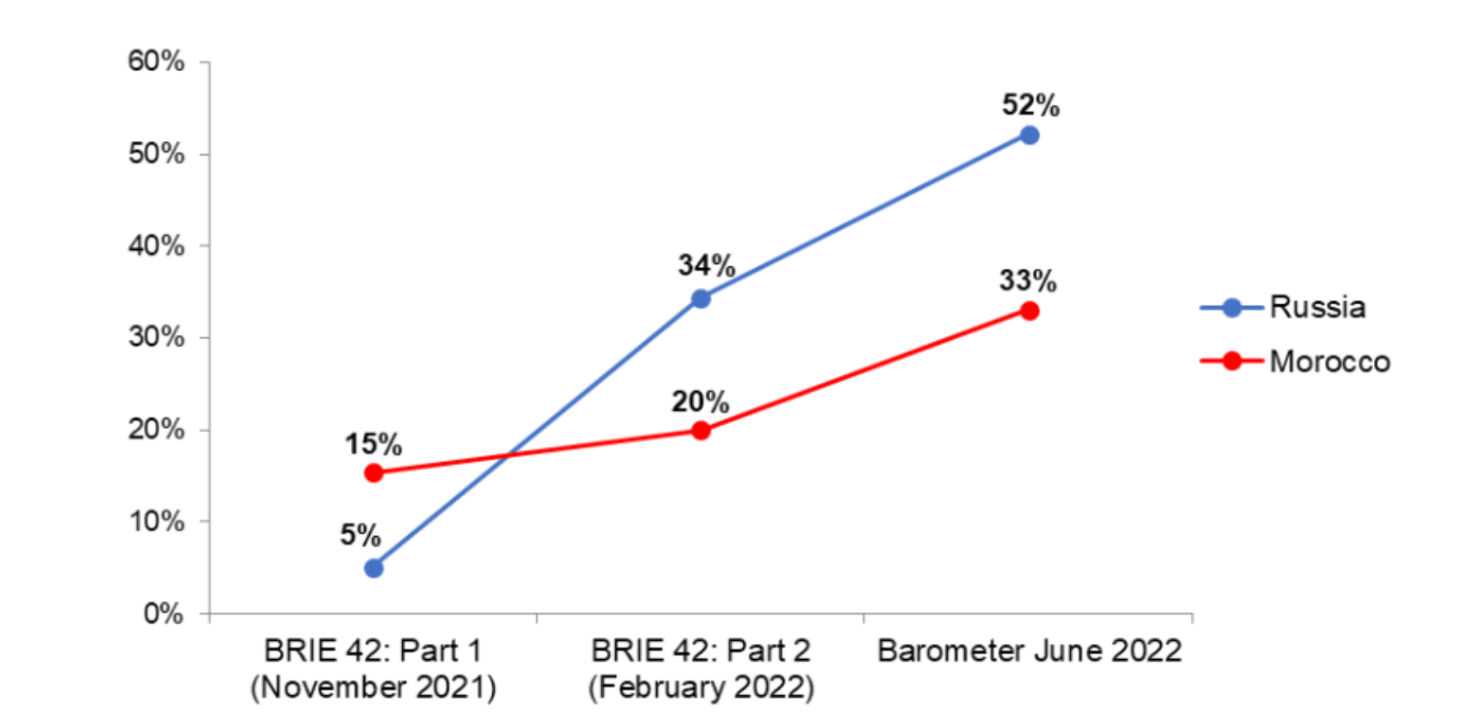
Russia and Morocco as threats to Spain. Source: García Encina & Powell, Real Instituto Elcano
Conclusion
Geography makes an impact regarding collective imagination, threat perception, and empathy, which in turn form each country’s policy priorities. Nonetheless, the global strategy is composed of many actors that engage with 1 another. As in any complex system, a behavioural change in 1 of the actors provokes reactions that encourage change in the remainder of the actors to adapt to the fresh situation.
That interconnectedness of the global strategy shows up with Algeria’s acquisition of the Russian fifth-generation Sukhoi Su-57 fighter jet, or with the presence of erstwhile Wagner mercenaries in the countries of the Sahel region through the Russian Africa Corps. While the Central and east European steppes are far from Spain geographically, and feel far from the country in its collective imagination, offering a perception of comparative safety, the domino effect of Russian aggression would yet affect all of Europe. Likewise, despite the distance between the Mediterranean and the Baltic capitals, an unstable confederate Flank diverts resources that could otherwise boost the east Flank.
Hence, for Spain and the European Union, a safe confederate Flank is of strategical importance. Maintaining safety regarding piracy and terrorism, stabilizing migration flows coming from Africa, securing the supply of energy resources, and countering Russia’s influence in the region are applicable objectives that may not look as applicable in the short word as defending the Baltic states from Russian drone incursions or helping Ukraine keep its defensive positions from the east European perspective. However, owing to the interconnectedness of these scenarios, the compound effect of a failure to accomplish security, stability, and reliable energy supplies from the south would weaken Europe as a whole, both in the face of its neighbours and the large powers alike.
Likewise, unchangeable home politics aid carry stable, long-term abroad policy initiatives. In a country where interior nationalistic tensions are part of political life and frequently correlate with diverging abroad policy preferences, a multi-vector approach and attempts to aggregate interests possibly offers flexibility in abroad policy and home approval. Cultivating economical and diplomatic ties with China despite disagreements, supporting the late signed (and inactive contentious) trade agreements with Mercosur and India, implementing the country’s Africa Strategy, and countering US positions in Palestine and Iran while avoiding a further souring of bilateral relations, is how it looks like in practice.
Adrian Santano holds a BA degree in Political discipline from the University of the Basque Country, and an MA degree in European Studies from the University of Wrocław. Having lived in Spain, Poland, Turkey and Finland, his interests include European political economy and the geopolitics of Central and east Europe.
New east Europe is reader-supported. If you value independent coverage of Central and east Europe, delight consider supporting our work.
Click here to donate.