The acquisition of these ultra-modern aircraft will affect not only the Polish Air Force, but the armed forces as a whole. The F-35 Husarz fighters are not merely tools for achieving air superiority over an adversary. They are the flying command-and-control and data-distribution centers.

This is how history is made. On the late afternoon of May 22, a formation of aircraft appeared over the 32nd Tactical Air Base in Łask. It included two F-16s, but they were not the ones that drew the attention of the guests gathered on the tarmac. The heroes of the day were the F-35s flying in the center of the formation – the first three of the 32 Husarz aircraft purchased by Poland from the United States. The aircraft had traveled a long way. They departed from Fort Worth, Texas, with a stopover in the Azores before continuing their journey. In Polish airspace they were met by a pair of F-16 Jastrząb fighters. The aircraft circled the airfield several times before all five landed. On the runway, facing each other, there were MajGen (Pilot) Ireneusz Nowak, then Deputy Commander of the General Command of the Armed Forces and now Operational Commander of the Armed Forces, who personally piloted one of the F-16s, and Władysław Kosiniak-Kamysz, Polish Deputy Prime Minister and Minister of National Defense. The General reported on the successful ferry flight of the Husarz aircraft. Although some time will still pass before the F-35s achieve full operational readiness, it can already be said without exaggeration that Poland has acquired aircraft capable of elevating its armed forces to an entirely new level.
According to experts, the F-35 Lightning II is the most advanced combat aircraft in the world. To date, the American company Lockheed Martin has produced more than 1,300 of them. Most serve in the United States military, from the Air Force and Marine Corps to the Navy. However, 20 other countries – including the United Kingdom, Norway, Israel, and Japan – have also chosen to acquire the F-35s. These are among the closest allies of the United States, and Poland has now joined this elite group.
Well-Informed Aircraft
What kind of aircraft has Poland purchased? The Husarz is a fifth-generation single-seat fighter. Its primary missions include penetrating enemy air defenses, striking targets at long range, and gathering intelligence. These capabilities are made possible by its unique design and cutting-edge equipment. “When it comes to the F-35, we can talk about a whole range of advantages, but two of them are particularly crucial,” emphasizes MajGen Ireneusz Nowak. The first is low observability. The aircraft was built using stealth technology, making it extremely difficult for enemy radar systems to detect. This is aided by the airframe design and the fact that all weapons are carried internally. Additionally, the aircraft is coated with radar-absorbing materials, while specialized cooling systems reduce the engine’s thermal signature. As a result, the F-35 can penetrate enemy territory almost unnoticed, and deliver devastating strikes before the adversary even realizes it is there. That is however only part of the story.
“The aircraft is equipped with numerous sensors that collect enormous amounts of data,” explains MajGen (Pilot) Ireneusz Nowak. Sensors forming part of the electro-optical system are distributed throughout the airframe, which enables building the 360-degree situational awareness. The key question, however, is how a pilot can cope with such a vast flow of information. This is where fifth-generation technology comes into play. The F-35 features an advanced computer system known to pilots as sensor fusion. It rapidly integrates data collected by the aircraft and presents it as a coherent and easily understandable tactical picture. “The system creates a clear and comprehensive view of the tactical situation,” explains MajGen (Pilot) Ireneusz Nowak. The pilot receives information not only about a target’s location, but also its precise identification. These are known as weapon-quality tracks. The data is so accurate that the probability of accidentally striking unintended targets, such as civilian objects, is reduced to nearly zero.

Once a target has been identified, the pilot can employ a weapons suite that is just as versatile and advanced as the aircraft’s sensors. For its F-35 fleet, Poland has contracted, among other systems, the latest AIM-120D-3 version of the AMRAAMs. These missiles are capable of engaging air targets at ranges of up to 180 kilometers. “The technology remains classified, but I can assure you that these missiles are superior to the C5 and C7 variants currently in our inventory,” notes MajGen (Pilot) Ireneusz Nowak. The Husarz aircraft will also be equipped with American GBU-39 SDBs. After release from the aircraft, these glide bombs deploy their wings and can strike targets at distances of up to approximately 100 kilometers. Guided by GPS/INS systems, they can hit targets with an accuracy measured in only a few meters. Importantly, this type of weapon is capable of saturating enemy air defenses. In other words, such bombs can be released in numbers large enough to overwhelm hostile defensive systems and prevent them from intercepting every incoming munition. Naturally, the F-35 can also carry heavier munitions, including GBU-31 and GBU-38 guided bombs. The new aircraft will additionally receive AARGMs designed to destroy enemy radar systems. Poland is also closely monitoring Norway’s testing of the Joint Strike Missile (JSM), according to MajGen (Pilot) Ireneusz Nowak. Developed specifically for the F-35, the JSM is intended to engage both land and maritime targets at ranges of several hundred kilometers. This arsenal is complemented by the GAU-22/A 25-mm four-barrel rotary cannon and an advanced electronic warfare system. The latter allows F-35 pilots to disrupt and potentially paralyze enemy communications and electronic systems.
Taken together, this package is powerful enough to give any potential aggressor serious cause for concern. Yet the true strength of the F-35 extends far beyond its weapons. The Husarz does not operate in isolation. It was designed to function as a data-distribution hub and, when necessary, as a mobile command platform. It is intended to become a key component of a broader network designed to provide military superiority over an adversary – in the air, on land, and at sea.
Link Between Generations
The key concept is network-centric warfare. In practical terms, this means that the data collected and processed by an F-35 can be shared almost instantly with other aircraft, ground command posts, long-range missile batteries, and naval vessels. The process also works in reverse. The Husarz pilot may, for example, utilize radar information provided by other aircraft, including AWACS platforms or F-16 fighters.
For Poland – and for NATO as a whole – the integration of fourth- and fifth-generation aircraft is currently of critical importance. The Polish Air Force operates 47 multirole F-16 fighters and is expected to field 48 South Korean FA-50 aircraft. Technologically, these aircraft belong to a lower generation than the Husarz. The objective, however, is to ensure that all these platforms can operate together as a unified force.
As Col (Pilot) Łukasz Gradziński, Commander of the 31st Tactical Air Base in Poznań-Krzesiny and a long-time F-16 pilot, explains, every generation of aircraft has its strengths and limitations. By operating together, they can amplify each other’s advantages while compensating for weaknesses, thereby creating entirely new capabilities. “The goal is to achieve synergy,” the officer emphasizes. One example concerns weapons carriage. Because of stealth requirements, F-35s can carry fewer weapons than aircraft such as the F-16. External weapons pylons would compromise the aircraft’s low observability, so all munitions must be stored internally. Military planners take these factors into account when designing air operations. “During COMAO [Composite Air Operations], fifth-generation aircraft penetrate integrated air defense systems, disrupting or destroying enemy radars and missile launchers. Their low observability is a major advantage in this role. Fourth-generation aircraft can then exploit the resulting gap and strike additional targets,” explains Col (Pilot) Łukasz Gradziński.

Another pilot from Krzesiny, LtCol Wojciech Kieczur, Commander of the 6th Air Squadron, once summarized the concept in simple terms: ‘The F-35s kick the door open, and we bring the weapons through it at the right place and the right time.’ The statement was made during joint training between Polish F-16s and Norwegian F-35s temporarily deployed to Poznań. Such exercises have been conducted for several years during multinational events such as NATO Tiger Meet and Ramstein Flag. “However, the deployment of the Norwegian aircraft to Krzesiny provided us with the most valuable experience,” admits the commander of the 31st Tactical Air Base.
A major step toward integrating the two platforms will be the comprehensive modernization of Poland’s F-16 fleet to the F-16V Block 72 standard. “This is absolutely essential,” argues Col (Pilot) Krzysztof Duda, Commander of the 32nd Tactical Air Base in Łask. “We need new avionics, systems that improve combat effectiveness, AESA radar technology, modern self-protection systems, and the ability to employ the latest weapons. All of this will make our F-16s more modern, more capable, and fully able to operate within a network-centric environment.” For Łask Air Base, this is particularly important. Both F-16 and F-35 squadrons will eventually be stationed there, allowing the two generations of aircraft to operate together on a daily basis.
Homar Looks to the Sky
Communication between the two aircraft types is ensured by the Link 16 system, although information sharing occurs in a specific manner. “Fifth-generation aircraft receive all of our data. However, whether that information is shared back with us depends on the F-35 pilot,” explains Col (Pilot) Łukasz Gradziński. The planned modernization of Poland’s F-16 fleet will further enhance the capabilities of this system and improve cooperation within the Polish Air Force.
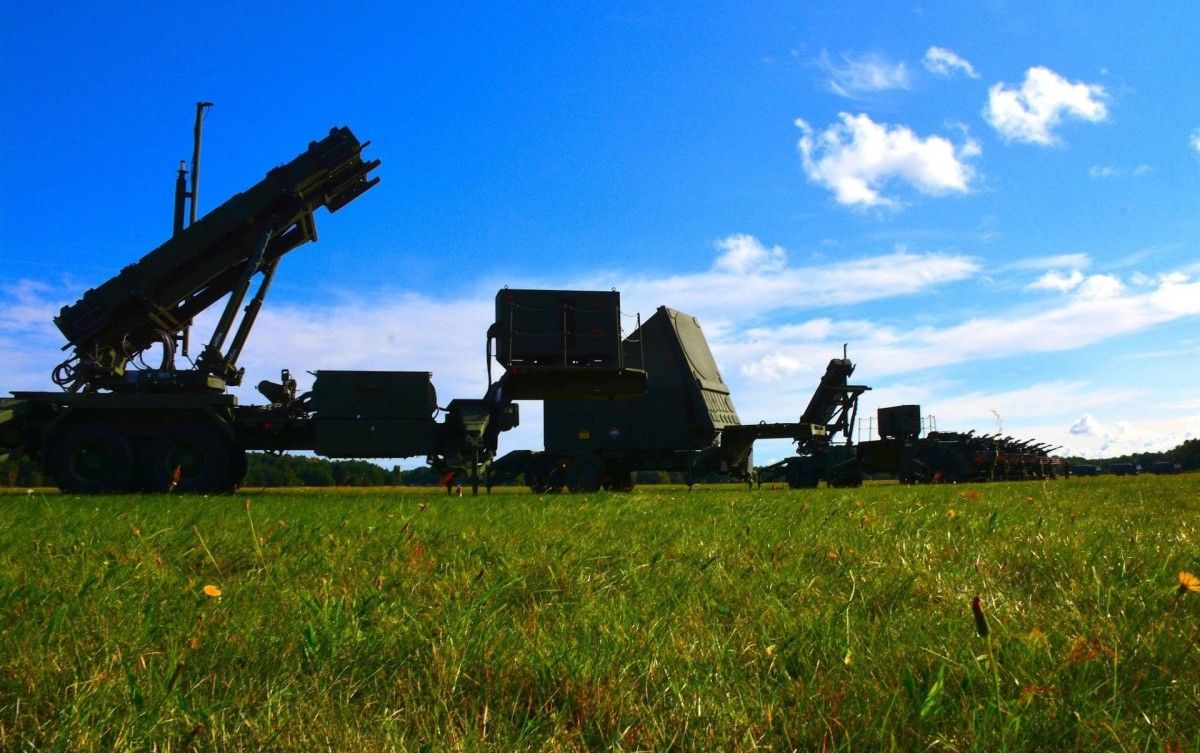
Yet the network into which the Husarz will be integrated extends far beyond aviation. The introduction of fifth-generation aircraft will fundamentally transform the way Poland’s rocket and artillery forces operate – particularly those units equipped with Homar-K and Homar-A multiple-launch rocket systems. According to Col Daniel Noga of the Rocket and Artillery Forces Directorate at the Armed Forces General Command, the F-35 should be viewed as a forward-deployed sensor platform. “Rocket artillery engages targets at distances ranging from 80 to as far as 300 kilometers. At such ranges, traditional reconnaissance faces limitations caused by factors such as the curvature of the Earth and various forms of interference. An F-35 operating at high altitude overcomes these constraints. It becomes the eyes of ground-based launchers,” the officer emphasizes. Equally important is the speed with which the aircraft can transmit information. “Operating deep within enemy territory, the aircraft can classify targets and determine their precise coordinates – whether air-defense batteries, command posts, or logistical hubs – and then transmit that information in real time to artillery command-and-control systems such as Topaz,” explains Col Daniel Noga. Another potential integrator is the Integrated Battle Command System (IBCS), recently acquired by Poland. Within this architecture, the F-35 will operate alongside Patriot air-defense systems, Narew air-defense batteries, and Pilica short-range defense systems.
The Husarz will also be able to cooperate directly with artillery during strike operations. “We will gain the capability to destroy high-value mobile targets almost immediately – such as moving military columns or ballistic missile launchers – before they can relocate,” says Col Daniel Noga. According to the officer, such cooperation will also improve the economy of warfare.
A typical scenario: the Husarz detects a target, but instead of expending its own weapons, it tasks artillery to engage it. The artillery delivers a larger and less expensive strike, while the pilot focuses on coordinating the mission and assessing its effectiveness. There is another important advantage. Maintaining constant communication with the Husarz should improve the survivability of artillery systems. If necessary, the pilot can warn artillery crews about emerging threats, allowing them to relocate before coming under attack.
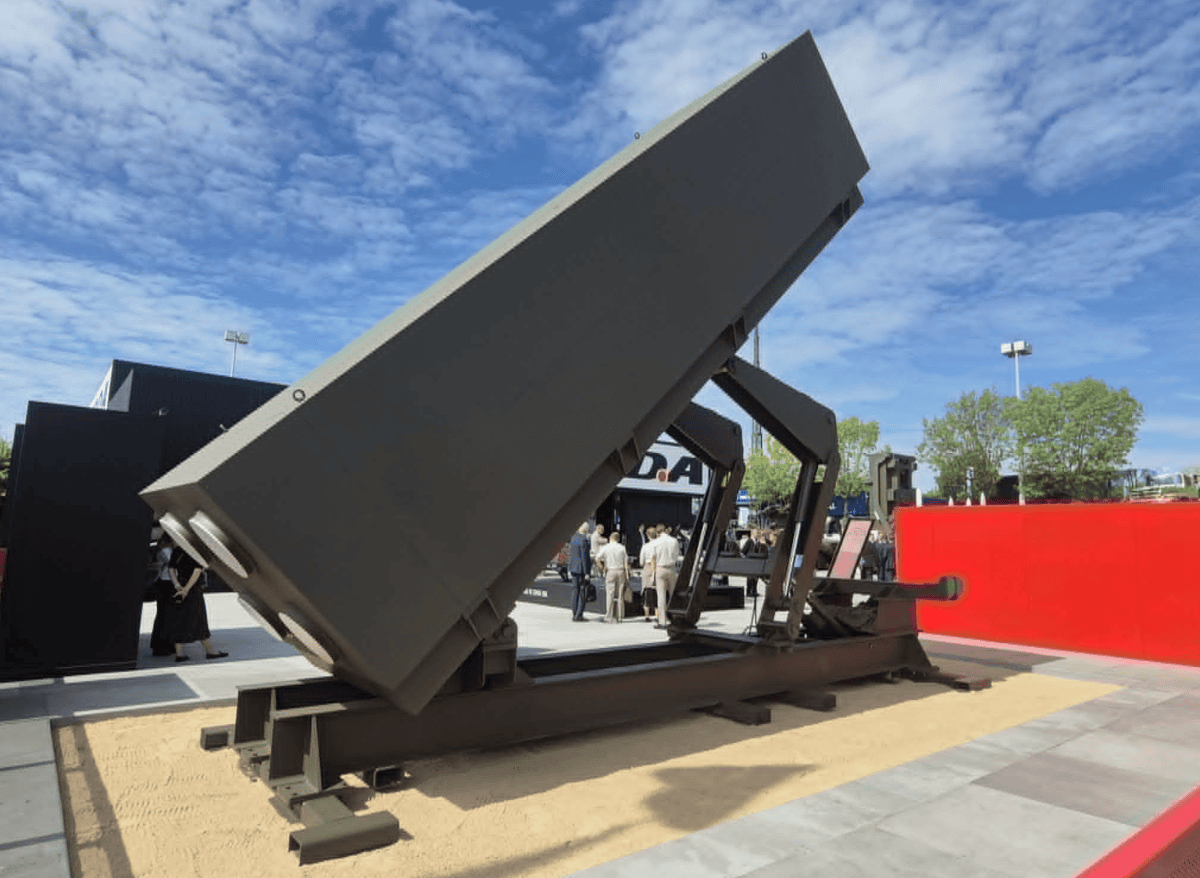
The F-35 will also cooperate closely with the Polish Navy. “Our primary mission is to maintain control of designated maritime areas and ensure freedom of navigation. In the event of a conflict, an adversary would do everything possible to deny us that freedom,” reminds Rear-Admiral Przemysław Karaś, Deputy Commander of the Maritime Operations Centre – Maritime Component Command (COM-DKM). The Polish Navy is undergoing modernization in order to protect national interests at sea more effectively. Among the most important future additions are the Miecznik-class multirole frigates, equipped with layered air- and missile-defense systems. These vessels will be capable of employing Naval Strike Missiles (NSMs) with a range of approximately 200 kilometers. As with long-range rocket artillery, however, many potential targets remain beyond the horizon and therefore outside the detection range of shipborne radars, which are limited by the curvature of the Earth. “F-35s can determine the exact location of such targets and generate targeting data necessary to conduct an attack. At the same time, they can help protect naval vessels against long-range missile strikes,” explains Rear-Admiral Przemysław Karaś. The Husarz can support coastal missile units in a similar manner. Poland is steadily expanding these capabilities. At present, the Polish Navy operates a single Naval Missile Unit equipped with NSM missiles. Additional firing units are planned, and the Naval Missile Unit will eventually be reorganized into a full Naval Missile Brigade.
The network of systems cooperating with the F-35 may expand even further. The United States is currently pursuing an experimental program known as Loyal Wingman. Its objective is to introduce unmanned combat aircraft capable of operating in close cooperation with manned fighters. These drones would be controlled by artificial intelligence while remaining under the supervision of a fighter pilot. “For now, we are observing the program very closely. However, once it reaches its final stage, we will seek to acquire this capability as well,” announces MajGen (Pilot) Ireneusz Nowak.
Our Game Changer
By acquiring the F-35, Poland has entered an elite club. According to MajGen (Pilot) Ireneusz Nowak, the country has significantly strengthened its position within NATO. This is particularly important because the Husarz is the first fifth-generation fighter aircraft to be stationed on NATO’s eastern flank. “We have become an important player in collective operational planning,” emphasizes MajGen (Pilot) Ireneusz Nowak. “These aircraft do not necessarily have to be employed exclusively within Poland. They can carry out missions wherever the Alliance requires them, even in entirely different theaters of operation.”
However, there is still work to be done before the F-35 reaches its full potential in Polish service. The coming months will be marked by the arrival of additional aircraft. By the end of 2026, another eleven F-35s are expected to be delivered to Poland. At the same time, intensive training of pilots, maintenance personnel, and support staff continues both domestically and abroad. A major milestone will be the achievement of Initial Operational Capability (IOC). “We assume that by the middle of 2027 we will be able to certify F-35 crews and integrate the aircraft into the national air-policing and combat-readiness system. The F-35s will join the F-16s and gradually replace the MiG-29s,” announces the General.
The new aircraft will also be progressively integrated with other branches of the armed forces. The associated procedures and operational concepts will then be validated during large-scale military exercises. Full Operational Capability (FOC) is expected to be achieved by 2030.
There is little doubt that the acquisition of the F-35 represents one of the most significant developments in the history of the Polish Armed Forces. The contract carries an enormous financial cost, yet the value of these aircraft cannot be measured solely in monetary terms. With the introduction of the Husarz fighters, Poland gains a powerful deterrent capability. Any potential adversary understands that even a few dozen aircraft of this type could have a decisive impact on the course of a conflict. At the same time, bringing such a sophisticated platform into service presents a formidable challenge. It requires tremendous effort, substantial organizational changes, and a willingness to move beyond traditional approaches to military operations. The Polish Armed Forces have been given an opportunity unlike any before. It is an opportunity they cannot afford to waste.